中文 | English
 新闻详情
新闻详情

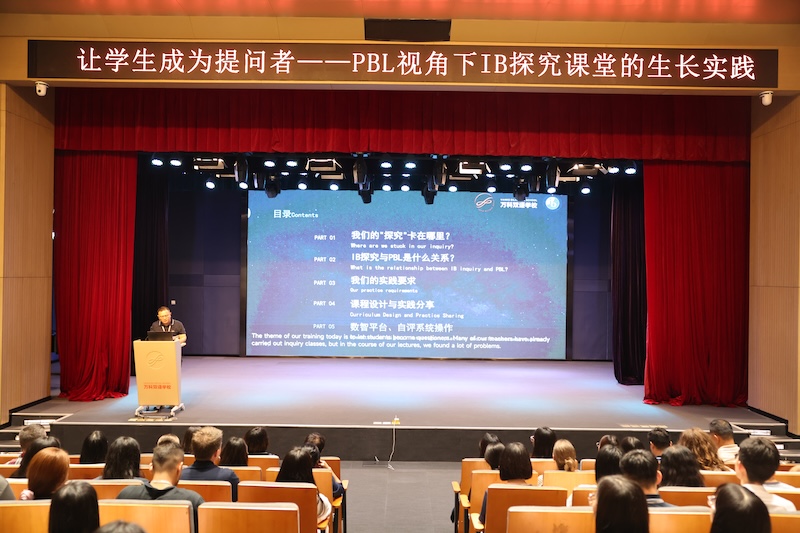
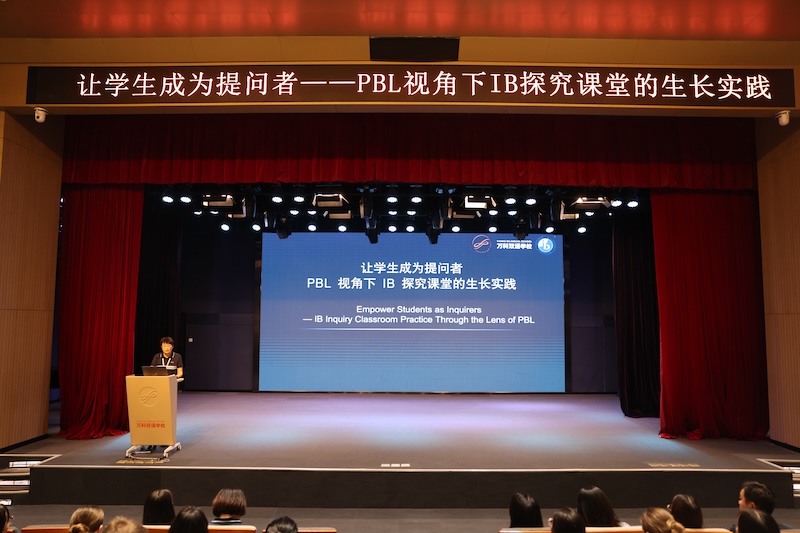
万双网讯 10月30日,深圳市龙华区万科双语学校开展面向全体教师的IB专项培训,以“让学生成为提问者——PBL视角下IB探究课堂的生长实践”为主题,围绕UOI、IDU单元的设计落地及PBL与IB探究的融合展开分享研讨。
On October 30th, Vanke Bilingual School in Longhua District, Shenzhen, held an IB training session for all of its teachers with the theme of “Making Students the Questioners—The Growing Practice of IB Inquiry-Based Classrooms from a PBL Perspective,” sharing and discussing the design and implementation of UOI and IDU units as well as the integration of PBL with IB inquiry.
彭平老师主持会议并作分享。他指出,探究课堂要真正落实学生主导,把提问权还给学生。结合《IB融合课程指南》,他阐释了探究式学习学生主导、重视过程、联结生活、自主建构知识体系四个核心特征,并提出PBL与IB探究式学习的底层逻辑一致。他要求各学科不做拼盘式课程,追求“真融合”“真跨学科”。
Teacher Peng Ping hosted the session and delivered a presentation. He pointed out that inquiry-based classrooms should place students at the center and give the right to ask questions to the students. Drawing on the IB Integrated Curriculum Guide, he explained the four core characteristics of inquiry-based learning—student-centeredness, emphasis on process, connection to life, and autonomous construction of knowledge—and argued that PBL and IB inquiry-based learning share the same underlying logic. He urged every subject to avoid a “patchwork” curriculum and to pursue “true integration” and “true interdisciplinarity.”
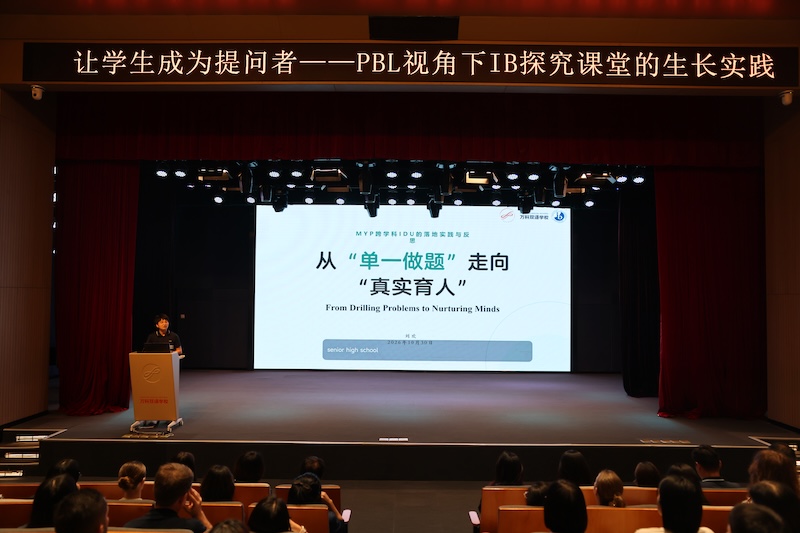
刘欢老师以数学、个人与社会(经济学)整合的《成本与选择:日常消费中的线性模型》单元为例,按探究六步法引导学生利用一次函数建模,从经济学视角审视模型局限,完成“青少年理财顾问”报告并分享消费小贴士。她总结出三条经验:用探究循环表推进单元;守住学科本体,让延伸探究成为融合节点;设计轻量化且学生做得到的行动。
Teacher Liu Huan took the unit “Cost and Choice: Linear Models in Everyday Consumption,” which integrates mathematics with individuals and societies (economics), as an example. Following the six-step inquiry method, she guided students to model linear functions, examine the limitations of the models from an economic perspective, complete a “teen financial advisor” report, and share consumption tips. She summarized three lessons that she learned: use the inquiry cycle table to advance the unit; preserve each subject’s disciplinary foundation and make extended inquiry a node of integration; and design actions that are lightweight and achievable for students.
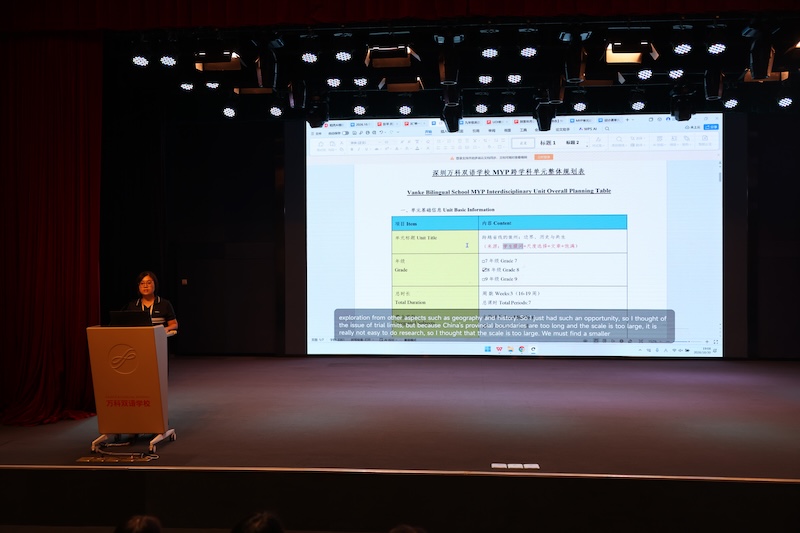
雷水莲老师以八年级单元《跨越省线的徽州:边界、历史与共生》为例,分享MYP跨学科单元整体规划表的设计与使用。该单元整合地理、历史与建筑教育,围绕“行政省界与文化边界错位”这一真实问题,引导学生探究赣皖省界的成因及徽州文化的共生关系。
Teacher Lei Shuilian used the Grade 8 unit “Huizhou Across Provincial Borders: Boundaries, History and Symbiosis” as an example to share the design and use of an MYP interdisciplinary unit planning overview. Integrating geography, history and architectural education, the unit revolves around the real-world question of the “misalignment between administrative provincial boundaries and cultural boundaries,” guiding students to explore the origins of the Jiangxi–Anhui provincial border and the symbiotic relationships of Huizhou culture.
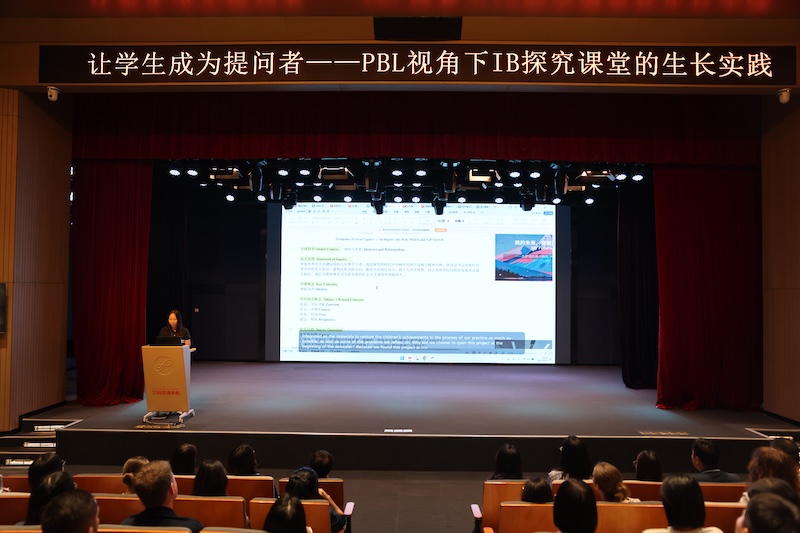
牛楚原老师分享九年级IDU案例《“伟人足迹”——榜样力量与自我成长探究》。该单元由英语与语文、历史、道德与法治协同实施,学生探究古今中外榜样的生平与品格,完成英文人物海报、成长倡议书与升学目标双语演讲,从认识榜样走向反思自我。
Teacher Niu Chuyuan shared a Grade 9 IDU case, “Traces of Great Figures—Exploring the Power of Role Models and Personal Growth.” Delivered through the collaborative implementation of English with Chinese, history, moral education, and rule of law, the unit had students explore the lives and characters of role models from ancient and modern times. They produced English character posters, growth initiative letters, and bilingual speeches on their academic goals, going beyond simply knowing role models to reflecting on themselves.
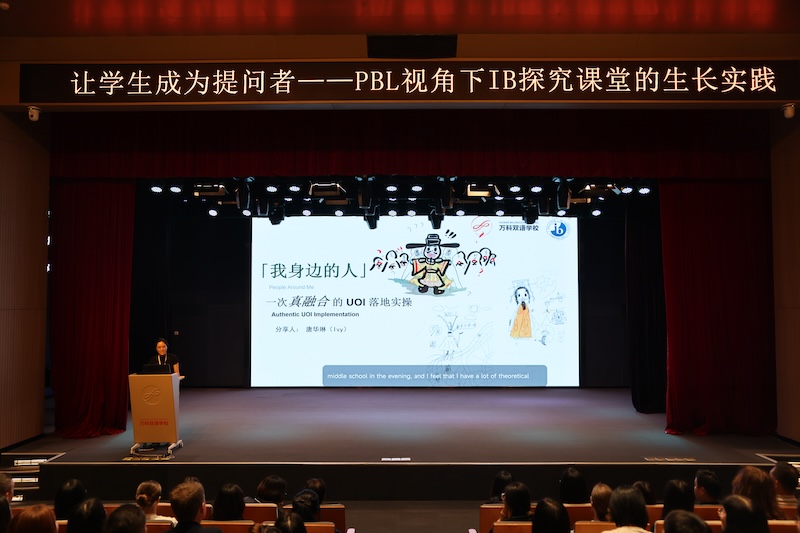
唐华琳老师以“我身边的人”单元为例,分享“真融合”的UOI实操:同一册教材,不变的是文本,变的是视角,语言学习由此升华为身份探究;多学科协作坚持“不硬融”,只与真正契合的学科合作;课堂上用“大问题”统领每一节英语课,让学生在真实交际中主动发现规律。她提出,要把提问权还给孩子,也要允许作品不完美。
Teacher Tang Hualin used the unit “The People Around Me” to share the hands-on practice of “true integration” in UOI: with the same textbook, what stays unchanged is the text while what changes is the perspective, and language learning is thereby elevated into identity inquiry. Multidisciplinary collaboration adheres to “no forced integration,” partnering only with subjects that truly fit. In class, a “big question” guides every English lesson, enabling students to actively discover patterns in authentic communication. She proposed returning the right to ask questions to the children while also allowing their work to be imperfect.
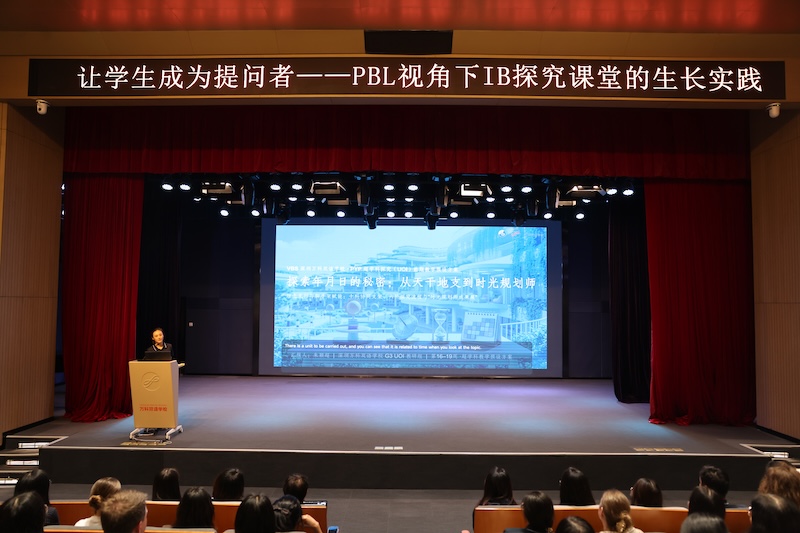
朱颖超老师分享三年级UOI单元《探索年月日的秘密》:以数学、英语为双主线,联动科学、历史、人工智能、经济学等学科。学生以PBL方式探究年月日的周期规律与古今历法演变,制作融合多学科元素的文创日历,并在“万双文创礼品店”开展双语路演与公益展卖。
Teacher Zhu Yingchao shared the Grade 3 UOI unit “Exploring the Secrets of Years, Months and Days”: with mathematics and English as the main threads, it links to subjects such as science, history, artificial intelligence and economics. Through PBL, students explore the cyclical patterns of years, months and days and the evolution of calendars across ancient and modern times. They create cultural calendars that integrate elements from multiple subjects, and will hold bilingual presentations and charity sales at the “Wanshuang Cultural and Creative Gift Shop.”
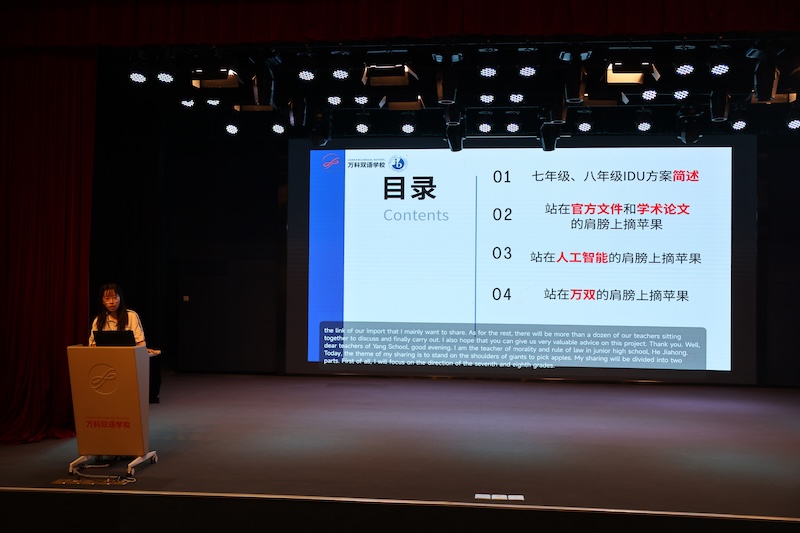
何嘉鸿老师以《站在巨人的肩膀上摘苹果》为题,介绍七年级《我是谁?我们是谁?》、八年级《互联的世界,共担的责任》两个IDU方案。她结合IB官方指南厘清了三个关键问题:“什么是有意义的整合机会”“什么是真正的IDU”“如何升级传统练习成为评价证据”。
Teacher He Jiahong, under the title of “Picking Apples While Standing on the Shoulders of Giants,” introduced two IDU plans: Grade 7’s “Who Am I? Who Are We?” and Grade 8’s “An Interconnected World, A Shared Responsibility.” Drawing on the official IB guide, she clarified three key questions: “What is a meaningful integration opportunity?”, “What is a true IDU?” and “How can traditional exercises be upgraded into assessment evidence?”
培训最后,杨校作总结讲话。她寄语全体教师在日常教学实践中深化IB理念,持续研读IB相关文件,积极利用智能体辅助备课。杨校还分享了她近期参加讲座时获得的关于人工智能与教育关系的启发,以及使用千问、豆包、WorkBuddy等智能工具的心得体会。杨校勉励大家以持续学习与实践助力学校IB候选校建设,在专业成长道路上不断前行。
At the end of the training, Principal Yang delivered a concluding speech. She encouraged all teachers to deepen their understanding of IB philosophy in daily teaching practice, keep studying IB-related documents, and make active use of intelligent agents to assist lesson preparation. She also shared the insights on the relationship between artificial intelligence and education that she had gained from a recent lecture, as well as her reflections on using intelligent tools such as Qwen, Doubao and WorkBuddy. Principal Yang urged everyone to support the school’s development as an IB candidate school through sustained learning and practice, and to keep advancing on the path of professional growth.
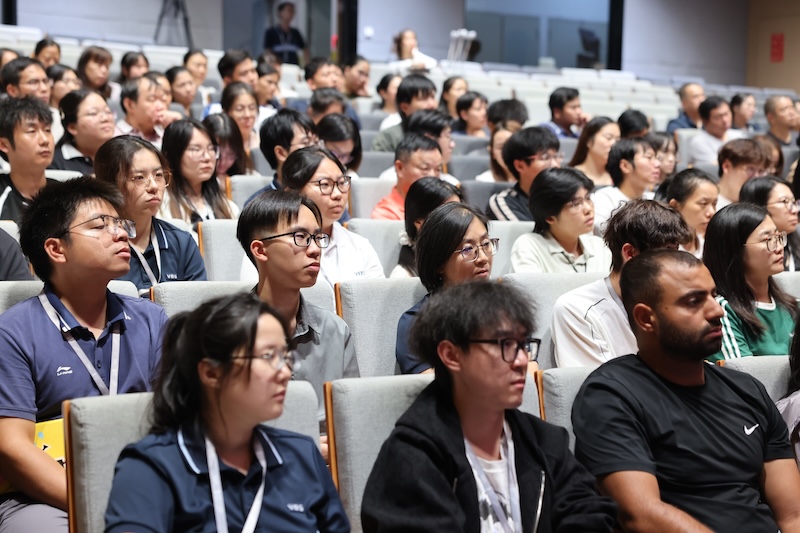
从理念辨析、设计方法到课堂实操,本次培训完整呈现了学校IB探究课程的实践路径。从提出问题到解决问题,从单一学科到跨学科融合,教师们在分享与研讨中努力创造更好的教育,让学生成为提问者,让孩子站在未来中央。
From the analysis of concepts and design methods to classroom practice, this training presented a complete picture of the school’s IB inquiry-based curriculum in action. From posing questions to solving problems, and from single subjects to interdisciplinary integration, all teachers worked through sharing and discussion to create better education—making students the questioners and putting children at the center of the future.
资料提供:王子玮
翻译:詹晰惠
初审:王子玮
复审:陈诺斯
终审:周金凤
排版:马葳
万双网讯 10月30日,深圳市龙华区万科双语学校开展面向全体教师的IB专项培训,以“让学生成为提问者——PBL视角下IB探究课堂的生长实践”为主题,围绕UOI、IDU单元的设计落地及PBL与IB探究的融合展开分享研讨。
On October 30th, Vanke Bilingual School in Longhua District, Shenzhen, held an IB training session for all of its teachers with the theme of “Making Students the Questioners—The Growing Practice of IB Inquiry-Based Classrooms from a PBL Perspective,” sharing and discussing the design and implementation of UOI and IDU units as well as the integration of PBL with IB inquiry.
彭平老师主持会议并作分享。他指出,探究课堂要真正落实学生主导,把提问权还给学生。结合《IB融合课程指南》,他阐释了探究式学习学生主导、重视过程、联结生活、自主建构知识体系四个核心特征,并提出PBL与IB探究式学习的底层逻辑一致。他要求各学科不做拼盘式课程,追求“真融合”“真跨学科”。
Teacher Peng Ping hosted the session and delivered a presentation. He pointed out that inquiry-based classrooms should place students at the center and give the right to ask questions to the students. Drawing on the IB Integrated Curriculum Guide, he explained the four core characteristics of inquiry-based learning—student-centeredness, emphasis on process, connection to life, and autonomous construction of knowledge—and argued that PBL and IB inquiry-based learning share the same underlying logic. He urged every subject to avoid a “patchwork” curriculum and to pursue “true integration” and “true interdisciplinarity.”
刘欢老师以数学、个人与社会(经济学)整合的《成本与选择:日常消费中的线性模型》单元为例,按探究六步法引导学生利用一次函数建模,从经济学视角审视模型局限,完成“青少年理财顾问”报告并分享消费小贴士。她总结出三条经验:用探究循环表推进单元;守住学科本体,让延伸探究成为融合节点;设计轻量化且学生做得到的行动。
Teacher Liu Huan took the unit “Cost and Choice: Linear Models in Everyday Consumption,” which integrates mathematics with individuals and societies (economics), as an example. Following the six-step inquiry method, she guided students to model linear functions, examine the limitations of the models from an economic perspective, complete a “teen financial advisor” report, and share consumption tips. She summarized three lessons that she learned: use the inquiry cycle table to advance the unit; preserve each subject’s disciplinary foundation and make extended inquiry a node of integration; and design actions that are lightweight and achievable for students.
雷水莲老师以八年级单元《跨越省线的徽州:边界、历史与共生》为例,分享MYP跨学科单元整体规划表的设计与使用。该单元整合地理、历史与建筑教育,围绕“行政省界与文化边界错位”这一真实问题,引导学生探究赣皖省界的成因及徽州文化的共生关系。
Teacher Lei Shuilian used the Grade 8 unit “Huizhou Across Provincial Borders: Boundaries, History and Symbiosis” as an example to share the design and use of an MYP interdisciplinary unit planning overview. Integrating geography, history and architectural education, the unit revolves around the real-world question of the “misalignment between administrative provincial boundaries and cultural boundaries,” guiding students to explore the origins of the Jiangxi–Anhui provincial border and the symbiotic relationships of Huizhou culture.
牛楚原老师分享九年级IDU案例《“伟人足迹”——榜样力量与自我成长探究》。该单元由英语与语文、历史、道德与法治协同实施,学生探究古今中外榜样的生平与品格,完成英文人物海报、成长倡议书与升学目标双语演讲,从认识榜样走向反思自我。
Teacher Niu Chuyuan shared a Grade 9 IDU case, “Traces of Great Figures—Exploring the Power of Role Models and Personal Growth.” Delivered through the collaborative implementation of English with Chinese, history, moral education, and rule of law, the unit had students explore the lives and characters of role models from ancient and modern times. They produced English character posters, growth initiative letters, and bilingual speeches on their academic goals, going beyond simply knowing role models to reflecting on themselves.
唐华琳老师以“我身边的人”单元为例,分享“真融合”的UOI实操:同一册教材,不变的是文本,变的是视角,语言学习由此升华为身份探究;多学科协作坚持“不硬融”,只与真正契合的学科合作;课堂上用“大问题”统领每一节英语课,让学生在真实交际中主动发现规律。她提出,要把提问权还给孩子,也要允许作品不完美。
Teacher Tang Hualin used the unit “The People Around Me” to share the hands-on practice of “true integration” in UOI: with the same textbook, what stays unchanged is the text while what changes is the perspective, and language learning is thereby elevated into identity inquiry. Multidisciplinary collaboration adheres to “no forced integration,” partnering only with subjects that truly fit. In class, a “big question” guides every English lesson, enabling students to actively discover patterns in authentic communication. She proposed returning the right to ask questions to the children while also allowing their work to be imperfect.
朱颖超老师分享三年级UOI单元《探索年月日的秘密》:以数学、英语为双主线,联动科学、历史、人工智能、经济学等学科。学生以PBL方式探究年月日的周期规律与古今历法演变,制作融合多学科元素的文创日历,并在“万双文创礼品店”开展双语路演与公益展卖。
Teacher Zhu Yingchao shared the Grade 3 UOI unit “Exploring the Secrets of Years, Months and Days”: with mathematics and English as the main threads, it links to subjects such as science, history, artificial intelligence and economics. Through PBL, students explore the cyclical patterns of years, months and days and the evolution of calendars across ancient and modern times. They create cultural calendars that integrate elements from multiple subjects, and will hold bilingual presentations and charity sales at the “Wanshuang Cultural and Creative Gift Shop.”
何嘉鸿老师以《站在巨人的肩膀上摘苹果》为题,介绍七年级《我是谁?我们是谁?》、八年级《互联的世界,共担的责任》两个IDU方案。她结合IB官方指南厘清了三个关键问题:“什么是有意义的整合机会”“什么是真正的IDU”“如何升级传统练习成为评价证据”。
Teacher He Jiahong, under the title of “Picking Apples While Standing on the Shoulders of Giants,” introduced two IDU plans: Grade 7’s “Who Am I? Who Are We?” and Grade 8’s “An Interconnected World, A Shared Responsibility.” Drawing on the official IB guide, she clarified three key questions: “What is a meaningful integration opportunity?”, “What is a true IDU?” and “How can traditional exercises be upgraded into assessment evidence?”
培训最后,杨校作总结讲话。她寄语全体教师在日常教学实践中深化IB理念,持续研读IB相关文件,积极利用智能体辅助备课。杨校还分享了她近期参加讲座时获得的关于人工智能与教育关系的启发,以及使用千问、豆包、WorkBuddy等智能工具的心得体会。杨校勉励大家以持续学习与实践助力学校IB候选校建设,在专业成长道路上不断前行。
At the end of the training, Principal Yang delivered a concluding speech. She encouraged all teachers to deepen their understanding of IB philosophy in daily teaching practice, keep studying IB-related documents, and make active use of intelligent agents to assist lesson preparation. She also shared the insights on the relationship between artificial intelligence and education that she had gained from a recent lecture, as well as her reflections on using intelligent tools such as Qwen, Doubao and WorkBuddy. Principal Yang urged everyone to support the school’s development as an IB candidate school through sustained learning and practice, and to keep advancing on the path of professional growth.
从理念辨析、设计方法到课堂实操,本次培训完整呈现了学校IB探究课程的实践路径。从提出问题到解决问题,从单一学科到跨学科融合,教师们在分享与研讨中努力创造更好的教育,让学生成为提问者,让孩子站在未来中央。
From the analysis of concepts and design methods to classroom practice, this training presented a complete picture of the school’s IB inquiry-based curriculum in action. From posing questions to solving problems, and from single subjects to interdisciplinary integration, all teachers worked through sharing and discussion to create better education—making students the questioners and putting children at the center of the future.
资料提供:王子玮
翻译:詹晰惠
初审:王子玮
复审:陈诺斯
终审:周金凤
排版:马葳

让孩子站在未来中央
地址:深圳市龙华区民治街道华南路80号
Tel:0755-66866333
Email:p-vbs@msedu.email

办学理念:让孩子站在未来中央
培养(成长)目标:培养(成为)身体健康、人格健全、学力卓越,具有家国情怀和国际视野, 敢于创造美好未来的中国公民,为开创更美好、更和平的世界贡献力量。 地址:深圳市龙华区民治街道华南路80号 电话:0755-66866333 http://vbs.vanke.com Vanke Bilingual School, Longhua District, Shenzhen Educational Idea: Let our children experience the future. Training objectives: Our students will become citizens of China with good physical health, sound personality, excellent academic abilities, patriotism, international vision and the courage to create a better future and a more peaceful world. Address: No.80 Huanan Road, Minzhi Sub-district, Longhua District, Shenzhen Contact: 0755-66866333 http://vbs.vanke.com
学校网站二维码
QR code of school website
学校公众号二维码
QR code of school official account
