中文 | English
 新闻详情
新闻详情

万双网讯 秋意渐浓,教育的目光从制度建设走向心灵唤醒。基于学校《班级和学生自主发展评价方案》,为营造良好班级生态、激发学生内驱力,万科双语学校第52期班主任成长帮帮团于10月26日举行。本次活动以“唤醒内驱力,赋能自主成长”为主题,班主任与生活教师团队联袂分享,围绕小组建设、岗位设置、班会课三个递进维度深入展开;全体班主任与生活教师共同探讨赋能班级成长的具体路径。
As autumn deepens, the focus of education is shifting from institution-building to awakening of the mind. Based on the school’s Class and Student Self-Directed Development Evaluation Plan, with the aim of creating a sound classroom ecology and stimulating students’ inner drive, the 52nd Class Teacher Growth Support Group of Vanke Bilingual School was held on October 26th. With the theme of “Awakening Inner Drive and Empowering Self-Directed Growth,” the class teacher and life teacher teams jointly shared their insights, exploring in depth on three progressive dimensions: group building, position setup, and class meeting lessons. All class teachers and life teachers discussed paths for empowering class growth.
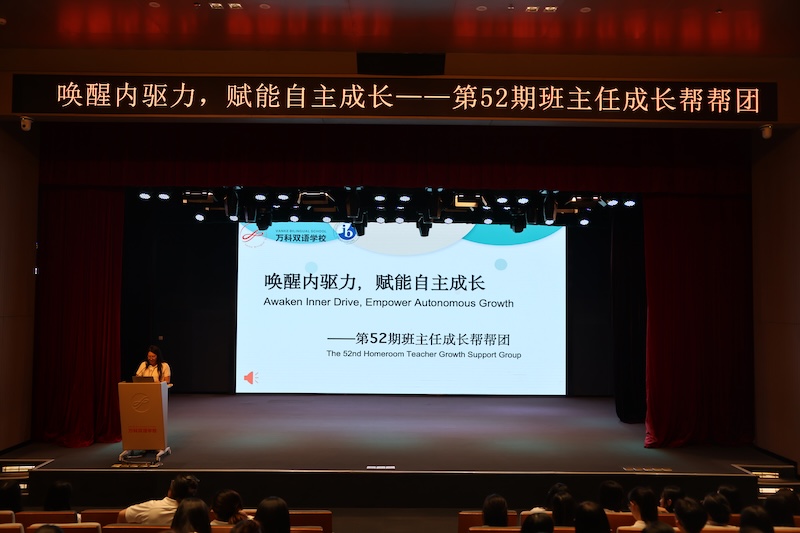
深耕小组建设,夯实自主合作根基
Deepening Group Building to Consolidate the Foundation of Autonomous Cooperation
陈玮一、谢冬梅、任洁瑄团队分享了如何让小组真正运转起来。团队指出,自主管理的起点是微协作,关键在于通过差异化的角色设计让每个孩子找到位置:低年段设置“材料员”“发言人”,建立基础合作;中高年段增设“记录者”“守护者”,推动深度协作。同时,借助阶梯墙等结构化工具,教师实现从“扶着走”到“看着走”的梯度放手,让小组成为内驱力生长的土壤。
The team of Chen Weiyi, Xie Dongmei, and Ren Jiexuan shared how to make small groups operate properly. The team pointed out that the starting point of self-management is micro-collaboration, and the key is to help every child find a place through differentiated role design: lower grades set up “material managers” and “spokespersons” to establish basic cooperation; middle and upper grades add “recorders” and “guardians” to promote deeper collaboration. At the same time, with structured tools such as ladder walls, teachers achieve a gradual release from “holding their hands” to “watching them go,” making groups the soil in which inner drive grows.
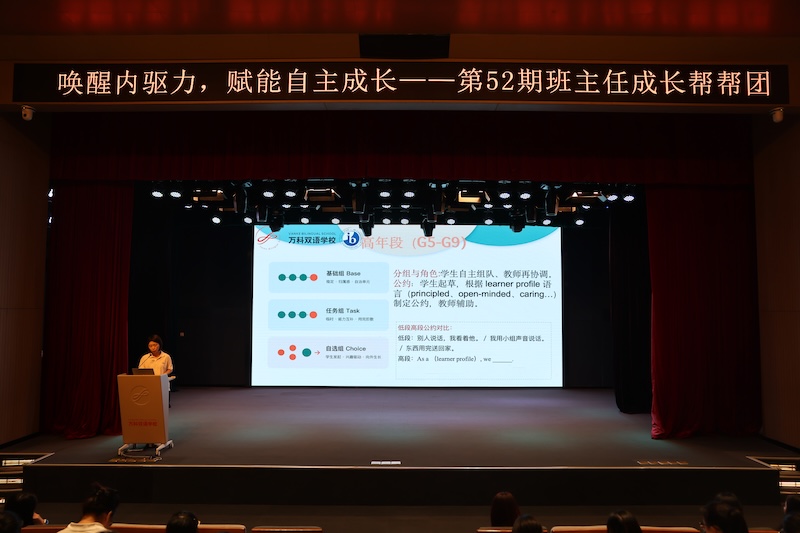
优化岗位设置,激发班级自治动能
Optimizing Position Setup to Stimulate the Momentum of Class Self-Governance
唐华琳、蒋雪莹及生活老师李荣菊、张明玉团队聚焦班级运转。团队指出,班干部不应仅是管理者,更是引领者。通过推行“自主申报+责任明确”的竞选机制并颁发正式聘书,赋予岗位仪式感。岗位设置上,低段细化事务岗,高段构建核心管理团队。班主任也随之从“指挥官”退居“顾问”,在信任与放权中,让孩子们真正感受到“这个班级需要我”。
Tang Hualin, Jiang Xueying, and life teachers Li Rongju and Zhang Mingyu focused on class operations. The team noted that class cadres should not only be managers, but also leaders. By implementing the mechanism of “self-nomination + clear responsibilities” and issuing formal letters of appointment, they give positions a sense of ceremony. In terms of positional setup, lower grades refine task-based posts, while upper grades build core management teams. Class teachers gradually retreat from being “commanders” to becoming “advisors”; using trust and delegation to make children truly feel that “this class needs me.”
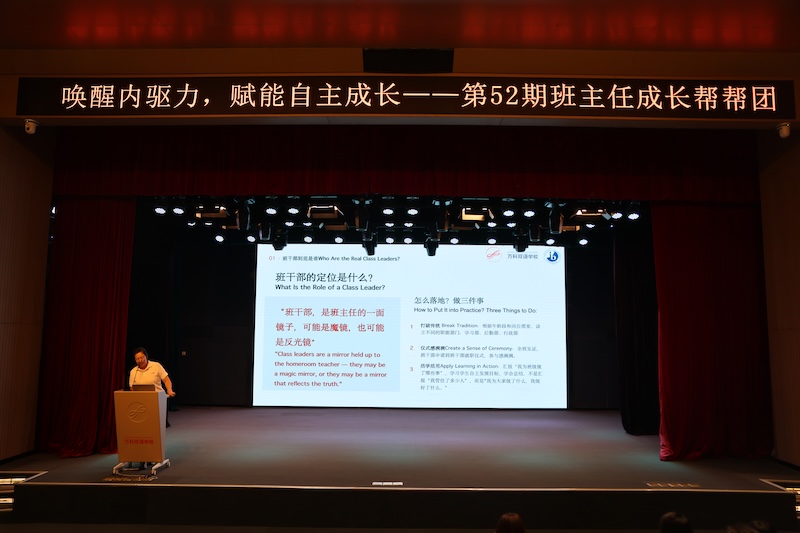
依托真实情境,培育学生责任担当
Relying on Real-Life Situations to Cultivate Students’ Sense of Responsibility
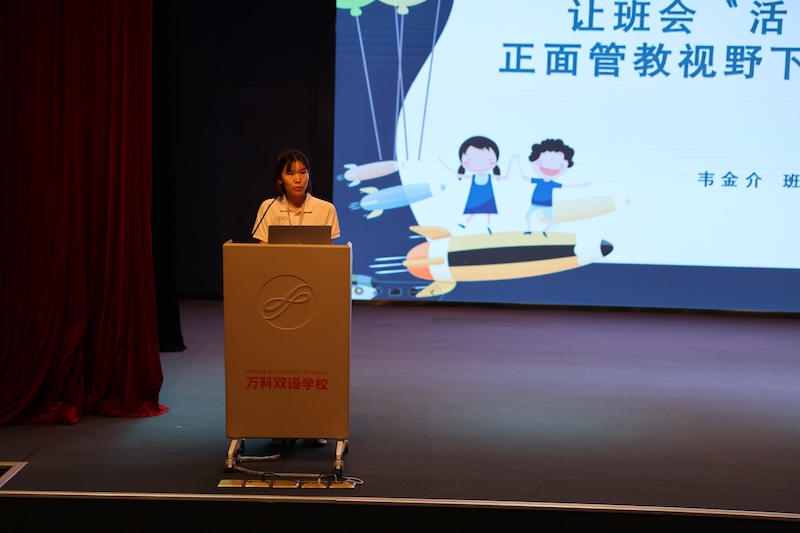
韦金介、王悦及生活老师罗春华、曾艳红团队直击自主管理的深水区。团队强调,责任教育不能靠道德施压或悄悄兜底,必须扎根真实情境。老师通过结构化班会流程,引导学生围绕“国旗下讲话临时请假”“运动会替补”等真实两难事件进行头脑风暴。在“和善而坚定”的氛围中,帮助学生区分“对自己负责”与“对集体负责”,让责任感在讨论与共情中自然生长。
Wei Jinjie, Wang Yue, and life teachers Luo Chunhua and Zeng Yanhong addressed the depth of self-management. The team emphasized that education on responsibility cannot rely on moral pressure or cover-ups; it must take root from real situations. Through structured class meeting procedures, teachers can guide students to brainstorm around real dilemmas such as “a last-minute leave on the day of giving the speech under the national flag” and “a substitute runner at the sports meet.” In an atmosphere of being “kind and firm,” they helped students distinguish between “being responsible for oneself” and “being responsible for the collective,” allowing a sense of responsibility to grow naturally through discussion and empathy.
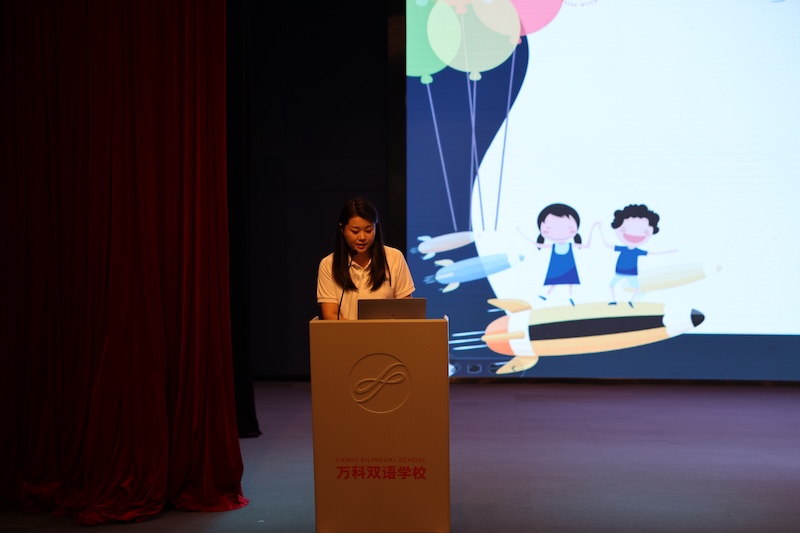
总结升华:从台前走向幕后
Summary and Elevation: From Front Stage to Backstage
活动最后,主持人总结指出,本期三个板块恰好拼合成班级自主发展的完整闭环——从小组底色、岗位骨架到责任灵魂。正如评价方案的初衷,评价不为贴标签,而是为了解决问题。她呼吁全体教师将工具带回班级,用角色接住尝试,用岗位赋予权力,用班会唤醒内驱力。当老师从“台前指挥官”退后一步,成为“幕后引导者”时,孩子们的内驱力必将向前一步。
At the end of the event, the host summarized that the three sections of this session linked together for the topic of class self-directed development—with groups as the foundation, positions as the framework, and responsibility as the soul. As with the original intention of the evaluation plan, evaluation is not for labeling but for solving problems. She called on all teachers to bring the tools back to their classes, to make attempts with assigned roles, empower each position, and awaken everyone’s inner drive with class meetings. When teachers step back from being “front-stage commanders” to becoming “backstage guides,” children’s inner drive will surely move forward one step.
资料提供:杨钰蕾
翻译:夏尚汝
翻译校对:Timothy Beers
初审:王子玮
复审:陈诺斯
终审:周金凤
排版:马葳
万双网讯 秋意渐浓,教育的目光从制度建设走向心灵唤醒。基于学校《班级和学生自主发展评价方案》,为营造良好班级生态、激发学生内驱力,万科双语学校第52期班主任成长帮帮团于10月26日举行。本次活动以“唤醒内驱力,赋能自主成长”为主题,班主任与生活教师团队联袂分享,围绕小组建设、岗位设置、班会课三个递进维度深入展开;全体班主任与生活教师共同探讨赋能班级成长的具体路径。
As autumn deepens, the focus of education is shifting from institution-building to awakening of the mind. Based on the school’s Class and Student Self-Directed Development Evaluation Plan, with the aim of creating a sound classroom ecology and stimulating students’ inner drive, the 52nd Class Teacher Growth Support Group of Vanke Bilingual School was held on October 26th. With the theme of “Awakening Inner Drive and Empowering Self-Directed Growth,” the class teacher and life teacher teams jointly shared their insights, exploring in depth on three progressive dimensions: group building, position setup, and class meeting lessons. All class teachers and life teachers discussed paths for empowering class growth.
深耕小组建设,夯实自主合作根基
Deepening Group Building to Consolidate the Foundation of Autonomous Cooperation
陈玮一、谢冬梅、任洁瑄团队分享了如何让小组真正运转起来。团队指出,自主管理的起点是微协作,关键在于通过差异化的角色设计让每个孩子找到位置:低年段设置“材料员”“发言人”,建立基础合作;中高年段增设“记录者”“守护者”,推动深度协作。同时,借助阶梯墙等结构化工具,教师实现从“扶着走”到“看着走”的梯度放手,让小组成为内驱力生长的土壤。
The team of Chen Weiyi, Xie Dongmei, and Ren Jiexuan shared how to make small groups operate properly. The team pointed out that the starting point of self-management is micro-collaboration, and the key is to help every child find a place through differentiated role design: lower grades set up “material managers” and “spokespersons” to establish basic cooperation; middle and upper grades add “recorders” and “guardians” to promote deeper collaboration. At the same time, with structured tools such as ladder walls, teachers achieve a gradual release from “holding their hands” to “watching them go,” making groups the soil in which inner drive grows.
优化岗位设置,激发班级自治动能
Optimizing Position Setup to Stimulate the Momentum of Class Self-Governance
唐华琳、蒋雪莹及生活老师李荣菊、张明玉团队聚焦班级运转。团队指出,班干部不应仅是管理者,更是引领者。通过推行“自主申报+责任明确”的竞选机制并颁发正式聘书,赋予岗位仪式感。岗位设置上,低段细化事务岗,高段构建核心管理团队。班主任也随之从“指挥官”退居“顾问”,在信任与放权中,让孩子们真正感受到“这个班级需要我”。
Tang Hualin, Jiang Xueying, and life teachers Li Rongju and Zhang Mingyu focused on class operations. The team noted that class cadres should not only be managers, but also leaders. By implementing the mechanism of “self-nomination + clear responsibilities” and issuing formal letters of appointment, they give positions a sense of ceremony. In terms of positional setup, lower grades refine task-based posts, while upper grades build core management teams. Class teachers gradually retreat from being “commanders” to becoming “advisors”; using trust and delegation to make children truly feel that “this class needs me.”
依托真实情境,培育学生责任担当
Relying on Real-Life Situations to Cultivate Students’ Sense of Responsibility
韦金介、王悦及生活老师罗春华、曾艳红团队直击自主管理的深水区。团队强调,责任教育不能靠道德施压或悄悄兜底,必须扎根真实情境。老师通过结构化班会流程,引导学生围绕“国旗下讲话临时请假”“运动会替补”等真实两难事件进行头脑风暴。在“和善而坚定”的氛围中,帮助学生区分“对自己负责”与“对集体负责”,让责任感在讨论与共情中自然生长。
Wei Jinjie, Wang Yue, and life teachers Luo Chunhua and Zeng Yanhong addressed the depth of self-management. The team emphasized that education on responsibility cannot rely on moral pressure or cover-ups; it must take root from real situations. Through structured class meeting procedures, teachers can guide students to brainstorm around real dilemmas such as “a last-minute leave on the day of giving the speech under the national flag” and “a substitute runner at the sports meet.” In an atmosphere of being “kind and firm,” they helped students distinguish between “being responsible for oneself” and “being responsible for the collective,” allowing a sense of responsibility to grow naturally through discussion and empathy.
总结升华:从台前走向幕后
Summary and Elevation: From Front Stage to Backstage
活动最后,主持人总结指出,本期三个板块恰好拼合成班级自主发展的完整闭环——从小组底色、岗位骨架到责任灵魂。正如评价方案的初衷,评价不为贴标签,而是为了解决问题。她呼吁全体教师将工具带回班级,用角色接住尝试,用岗位赋予权力,用班会唤醒内驱力。当老师从“台前指挥官”退后一步,成为“幕后引导者”时,孩子们的内驱力必将向前一步。
At the end of the event, the host summarized that the three sections of this session linked together for the topic of class self-directed development—with groups as the foundation, positions as the framework, and responsibility as the soul. As with the original intention of the evaluation plan, evaluation is not for labeling but for solving problems. She called on all teachers to bring the tools back to their classes, to make attempts with assigned roles, empower each position, and awaken everyone’s inner drive with class meetings. When teachers step back from being “front-stage commanders” to becoming “backstage guides,” children’s inner drive will surely move forward one step.
资料提供:杨钰蕾
翻译:夏尚汝
翻译校对:Timothy Beers
初审:王子玮
复审:陈诺斯
终审:周金凤
排版:马葳

让孩子站在未来中央
地址:深圳市龙华区民治街道华南路80号
Tel:0755-66866333
Email:p-vbs@msedu.email

办学理念:让孩子站在未来中央
培养(成长)目标:培养(成为)身体健康、人格健全、学力卓越,具有家国情怀和国际视野, 敢于创造美好未来的中国公民,为开创更美好、更和平的世界贡献力量。 地址:深圳市龙华区民治街道华南路80号 电话:0755-66866333 http://vbs.vanke.com Vanke Bilingual School, Longhua District, Shenzhen Educational Idea: Let our children experience the future. Training objectives: Our students will become citizens of China with good physical health, sound personality, excellent academic abilities, patriotism, international vision and the courage to create a better future and a more peaceful world. Address: No.80 Huanan Road, Minzhi Sub-district, Longhua District, Shenzhen Contact: 0755-66866333 http://vbs.vanke.com

学校网站二维码
QR code of school website
学校公众号二维码
QR code of school official account
