中文 | English
 新闻详情
新闻详情
新闻详情
新闻详情

万双网讯 为深化“以生为本”的教育理念,促进跨学段经验共享与教育智慧融合,万科双语学校于11月17日至24日成功举办第45期“成长帮帮团”活动。本次活动以“看见·学习·行动”为主线,组织一至九年级班主任及生活教师开展跨年级观摩与深度研讨,聚焦学生真实成长需求,共探教育细节中的实践智慧,构建从观察到实践的完整教育闭环。
To deepen the educational philosophy of being “student-centered,” promote the sharing of experience across different grades, and integrate educational wisdom, Vanke Bilingual School successfully held the 45th session of the “Growth Support Group” from November 17th to 24th. Centered on the theme of“Observe, Learn, Act,” this initiative organized homeroom and residential teachers from Grades 1 to 9 to conduct cross-grade classroom observations and engage in in-depth discussions. Focusing on each students’ authentic growth needs, participants collectively explored practical wisdom embedded in educational details, constructing a complete pedagogical loop from observation to practice.
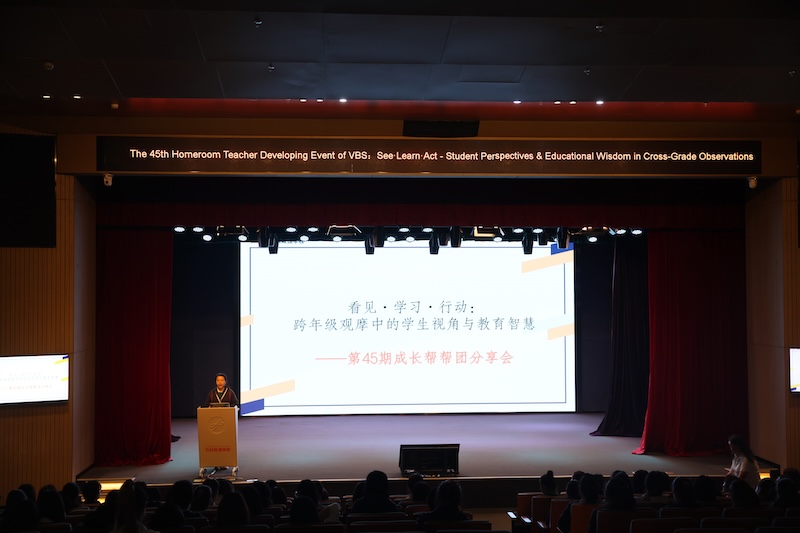
一、看见:俯身儿童世界,捕捉细节中的教育巧思
I. Observe: Stepping into the Student’s World, Finding Ingenuity in the Details
在前期观摩阶段,教师们走进不同年级的课堂与生活空间,以“是否便于学生使用、是否受学生喜爱、是否促进成长”为评估维度,捕捉日常教育场景中的育人细节。
During the initial observation phase, teachers entered the classrooms and life spaces of different grades. Using assessment criteria such as “Is it convenient for student use?”, “Is it welcomed by students?”, and “Does it facilitate growth? “, they captured nuanced, educational moments in daily routines.
低年级班级中,“会走路的水杯架”“涂鸦废纸箱”等设计充分考虑了儿童使用的便利性;“成长阶梯”“夸夸卡”则着眼于情感引导与习惯培养。中高年级的“自主管理岗位”“头脑风暴白板”“星光评价墙”等设计,进一步增强了学生的参与感和责任意识。七至九年级教师也走进小学课堂,借鉴“思维可视化”“个性化管理”等做法,为青春期教育探索适配策略。
In lower-grade classrooms, designs like the “mobile water bottle rack” and “scrap paper bin” fully anticipated children’s need for convenience, while tools like the “Growth Ladder” and “Praise Cards” focused on emotional guidance and habit formation. In middle and upper grades, setups like “Self-Management Duty Posts,” “Brainstorming Whiteboards,” and “Starlight Recognition Wall” further enhanced students’sense of participation and responsibility. Teachers from Grades 7 to 9 also visited elementary school classrooms, drawing inspiration from practices like “thinking visualization”and “personalized management”to explore suitable strategies for adolescent education.
这些发现不仅展现了教育现场的丰富样态,更反映出教师对学生立场的自觉回归——教室不仅是传授知识的场所,更是潜移默化中支持学生全面发展的“隐性课堂”。
These discoveries not only showcased the richness of the educational environment but also reflected a conscious return to the student’s focal point—that classrooms are not merely places for knowledge transmission but also “hidden tools”that subtly support students’all-round development.
二、学习:融汇所见所感,共创适配本班的行动方案
II. Learn: Integrating Observations and Insight to Co-create Tailored Action Plans
在成果分享环节,各年级组将观摩所得转化为具体可行的班级建设策略,实现从“看见”到“学会”的跨越。
In the outcome-sharing session, each grade-level group translated their observations into concrete, actionable strategies for classroom development, achieving the leap from “observing”to “learning.”
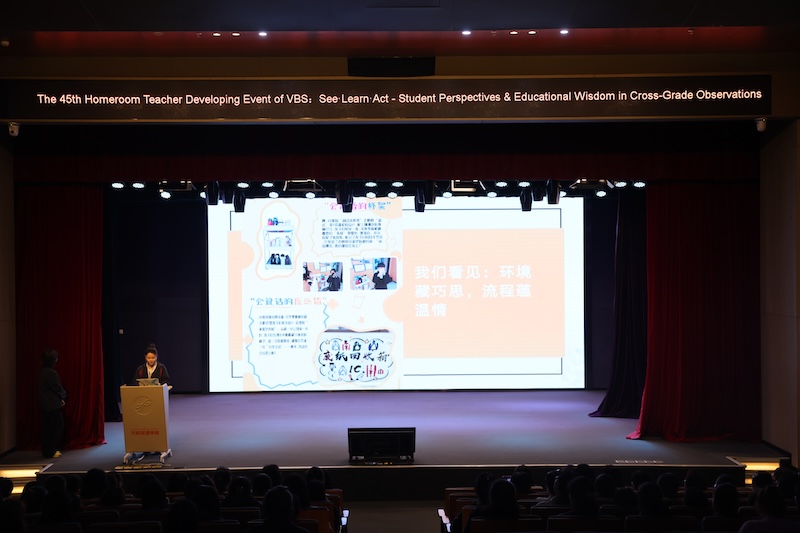
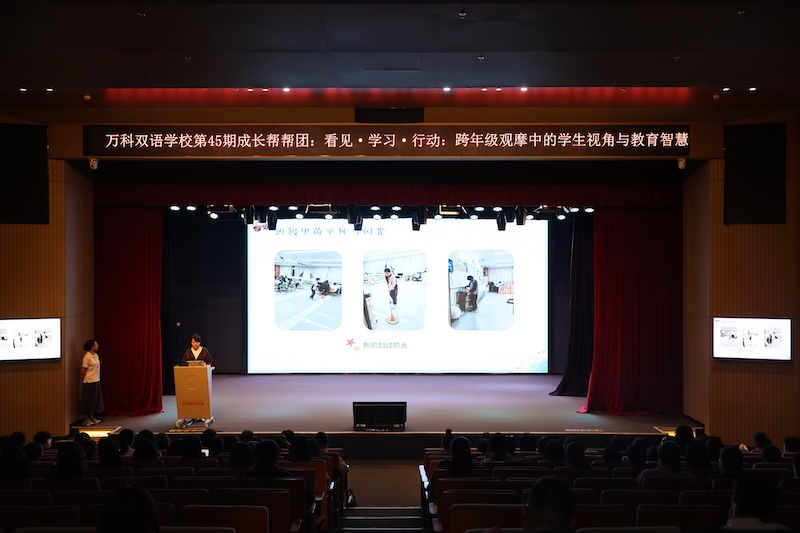
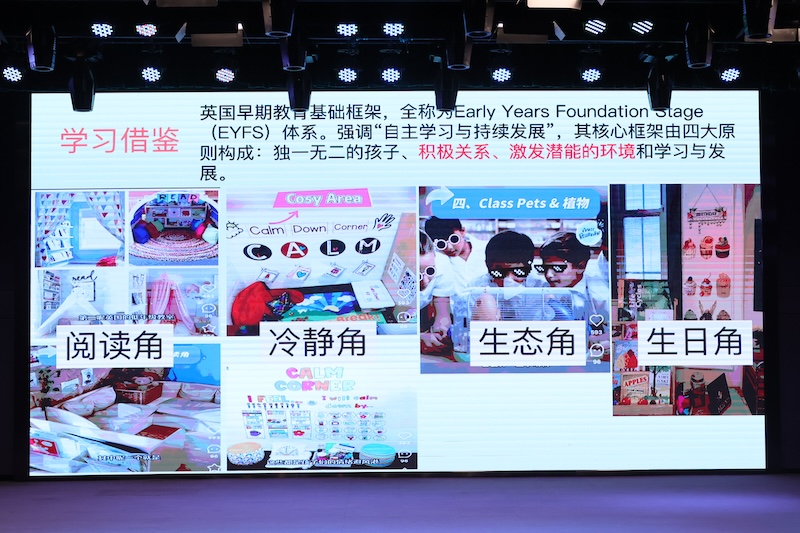
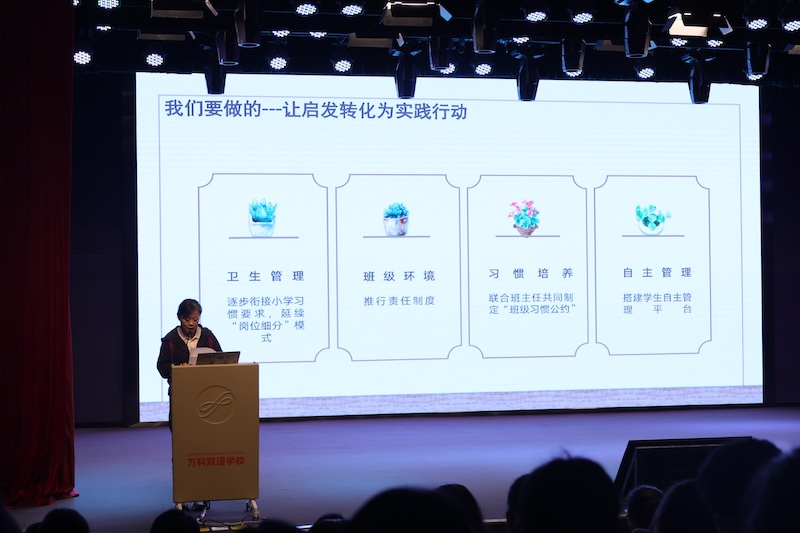
一年级计划打造“会说话的墙壁”,鼓励学生参与环境创设;二年级设立“提问角”,激发学生自主探究意识;三年级推动“趣味值日岗”,增强学生归属感与责任感。中高年级进一步优化岗位体系,构建“网格化管理”“周五复盘机制”等,提升学生自我管理能力。七至九年级组则结合学生心理发展特点,升级“情绪缓冲区”“主题白板讨论”等设计,营造兼具功能与温度的学习环境。
The first-grade team planned to create “Talking Walls”to encourage student participation in environmental design; the second-grade team proposed a “Question Corner”to spark independent inquiry; the third-grade team aimed to promote“Fun Duty Roles”to strengthen students’ sense of belonging and responsibility. Middle and upper grades further optimized duty systems, establishing structures like“Grid-Based Management”and “Friday Review Sessions”to enhance students’self-management skills. The Grades 7-9 group, taking in account the psychological development of adolescents, enhanced plans for an“Emotional Buffer Zone”and“Theme-based Whiteboard Discussions”to create a functional yet warm learning environment.
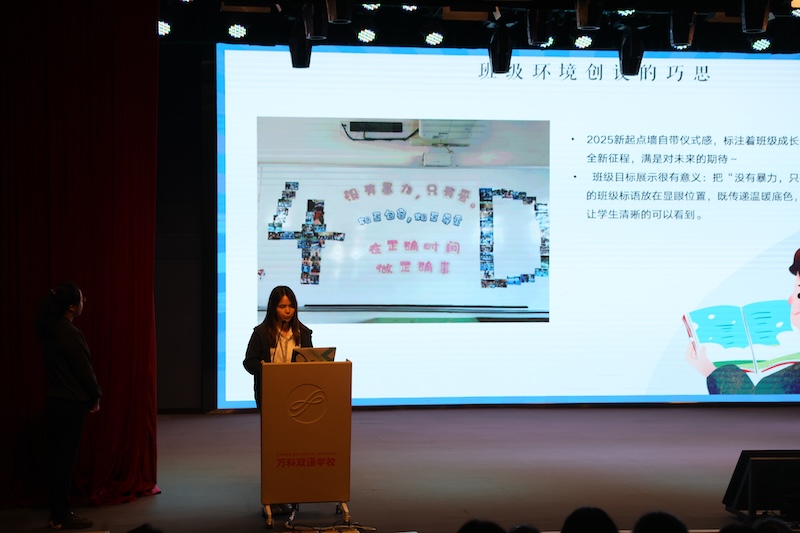
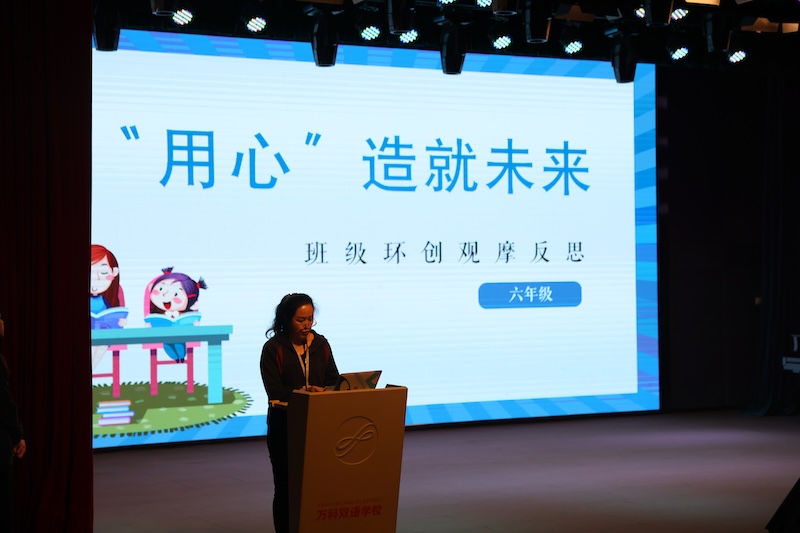
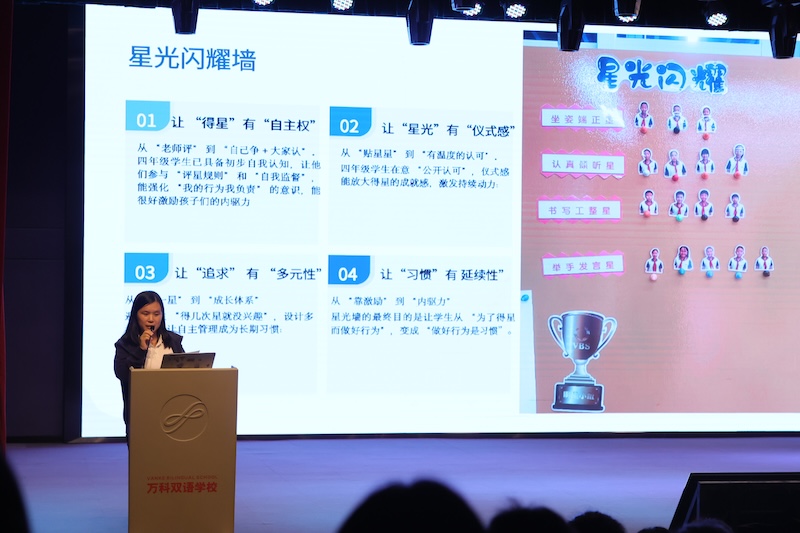
各年级均注重将观摩成果进行校本化转化,避免简单照搬,突出适需性与发展性。
All groups emphasized adapting observed practices into their specific context, avoiding mere mimicking, and highlighting appropriateness and developmental relevance.
三、行动:回归学生立场,构建“知行合一”的教育闭环
III. Act: Returning to the Student’s Focal Point to Build an Educational Loop of“Unity between Knowing and Doing”
在总结阶段,“学生视角”成为共识核心。教师团队在以下三方面达成一致:
1. 从“要求”到“回应”:教育设计应立足学生真实需求,如水杯架、情绪角等,实现从“教师主导”向“师生共建”转变;
2. 从“装饰”到“赋能”:教室环境应超越美化功能,成为激发思维、引导行为的成长载体;
3. 从“管理”到“激发”:通过合理放权、有效激励与环境共创,引导学生由“被动遵守”转向“主动成长”。
During the concluding phase, the“student centered perspective”emerged as the core consensus. The teaching team aligned on the following three aspects:
1. From “Requirement”to “Response”: Educational design should be grounded in students’genuine needs (e.g., the water bottle rack, emotion corner), shifting from a “teacher-led” to a “teacher-student co-created” approach.
2. From “Decoration”to “Empowerment”: The classroom environment should transcend mere aesthetics, becoming a growth-oriented space that stimulates thinking and guides behavior.
3. From “Management”to “Inspiration”: Through appropriate delegation of authority, effective incentives, and classroom environment co-creation, students can be guided from “passive compliance”to “active growth.”
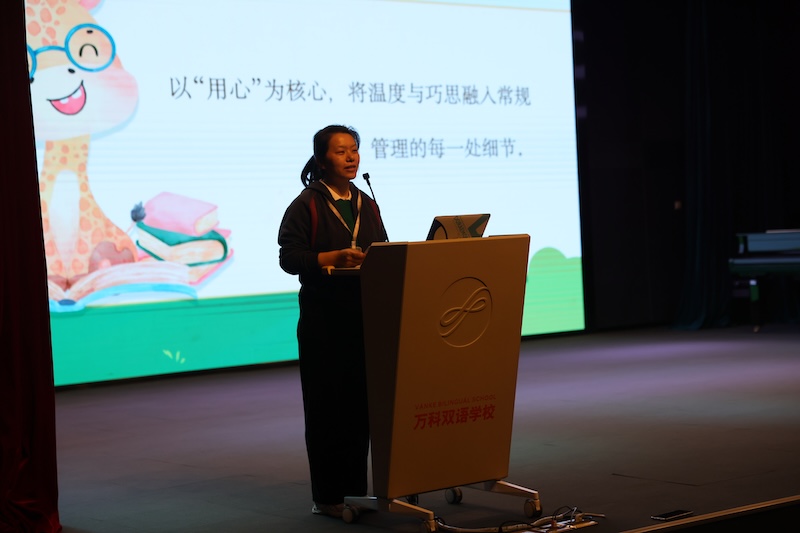
正如余丹老师在总结中强调:“教育的伟大,不在于轰轰烈烈,而在于将爱与智慧沉淀于每一个平常日子、每一处细微设计。”
As Teacher Yu Dan emphasized in her summary, “The greatness of education lies not in grand spectacles, but in putting love and wisdom into every ordinary day through every subtle design.”
四、结语:以共学共创,构建协同成长的育人生态
IV. Conclusion: Fostering a Collaborative Educational Ecology through Shared Learning
本期“成长帮帮团”以“看见—学习—行动”为路径,不仅打破了学段间的经验壁垒,更在全校范围内建立起了一个动态流转、持续完善的教育实践资源库。该机制助力每位教师成为教育的发现者、学习者和创新者,在共享与实践中共同迈向“眼中有人、心中有度、手中有法”的专业境界。
This session of the“Growth Support Group,”guided by the“Observe-Learn-Act”pathway, not only broke down barriers between school sections but also established a dynamic, continuously refined repository of educational practices school-wide. This mechanism empowers every teacher to become a discoverer, learner, and innovator in education, collectively advancing toward a professional realm characterized by“seeing the individual, holding principles in heart, and having methods at hand.”
未来,万科双语学校将继续依托“成长帮帮团”这一平台,推动教育智慧持续流动与迭代,让每一个孩子都在被理解、被支持的环境中成长,成为更好的自己。
Moving forward, Vanke Bilingual School will continue to leverage the“Growth Support Group”platform to facilitate the ongoing flow and evolution of educational wisdom, ensuring every child grows up in an environment where they are understood and supported, becoming their best selves.
资料提供/ 邹瑶
翻译/ 焦阳
排版/ 马葳
万双网讯 为深化“以生为本”的教育理念,促进跨学段经验共享与教育智慧融合,万科双语学校于11月17日至24日成功举办第45期“成长帮帮团”活动。本次活动以“看见·学习·行动”为主线,组织一至九年级班主任及生活教师开展跨年级观摩与深度研讨,聚焦学生真实成长需求,共探教育细节中的实践智慧,构建从观察到实践的完整教育闭环。
To deepen the educational philosophy of being “student-centered,” promote the sharing of experience across different grades, and integrate educational wisdom, Vanke Bilingual School successfully held the 45th session of the “Growth Support Group” from November 17th to 24th. Centered on the theme of“Observe, Learn, Act,” this initiative organized homeroom and residential teachers from Grades 1 to 9 to conduct cross-grade classroom observations and engage in in-depth discussions. Focusing on each students’ authentic growth needs, participants collectively explored practical wisdom embedded in educational details, constructing a complete pedagogical loop from observation to practice.
一、看见:俯身儿童世界,捕捉细节中的教育巧思
I. Observe: Stepping into the Student’s World, Finding Ingenuity in the Details
在前期观摩阶段,教师们走进不同年级的课堂与生活空间,以“是否便于学生使用、是否受学生喜爱、是否促进成长”为评估维度,捕捉日常教育场景中的育人细节。
During the initial observation phase, teachers entered the classrooms and life spaces of different grades. Using assessment criteria such as “Is it convenient for student use?”, “Is it welcomed by students?”, and “Does it facilitate growth? “, they captured nuanced, educational moments in daily routines.
低年级班级中,“会走路的水杯架”“涂鸦废纸箱”等设计充分考虑了儿童使用的便利性;“成长阶梯”“夸夸卡”则着眼于情感引导与习惯培养。中高年级的“自主管理岗位”“头脑风暴白板”“星光评价墙”等设计,进一步增强了学生的参与感和责任意识。七至九年级教师也走进小学课堂,借鉴“思维可视化”“个性化管理”等做法,为青春期教育探索适配策略。
In lower-grade classrooms, designs like the “mobile water bottle rack” and “scrap paper bin” fully anticipated children’s need for convenience, while tools like the “Growth Ladder” and “Praise Cards” focused on emotional guidance and habit formation. In middle and upper grades, setups like “Self-Management Duty Posts,” “Brainstorming Whiteboards,” and “Starlight Recognition Wall” further enhanced students’sense of participation and responsibility. Teachers from Grades 7 to 9 also visited elementary school classrooms, drawing inspiration from practices like “thinking visualization”and “personalized management”to explore suitable strategies for adolescent education.
这些发现不仅展现了教育现场的丰富样态,更反映出教师对学生立场的自觉回归——教室不仅是传授知识的场所,更是潜移默化中支持学生全面发展的“隐性课堂”。
These discoveries not only showcased the richness of the educational environment but also reflected a conscious return to the student’s focal point—that classrooms are not merely places for knowledge transmission but also “hidden tools”that subtly support students’all-round development.
二、学习:融汇所见所感,共创适配本班的行动方案
II. Learn: Integrating Observations and Insight to Co-create Tailored Action Plans
在成果分享环节,各年级组将观摩所得转化为具体可行的班级建设策略,实现从“看见”到“学会”的跨越。
In the outcome-sharing session, each grade-level group translated their observations into concrete, actionable strategies for classroom development, achieving the leap from “observing”to “learning.”
一年级计划打造“会说话的墙壁”,鼓励学生参与环境创设;二年级设立“提问角”,激发学生自主探究意识;三年级推动“趣味值日岗”,增强学生归属感与责任感。中高年级进一步优化岗位体系,构建“网格化管理”“周五复盘机制”等,提升学生自我管理能力。七至九年级组则结合学生心理发展特点,升级“情绪缓冲区”“主题白板讨论”等设计,营造兼具功能与温度的学习环境。
The first-grade team planned to create “Talking Walls”to encourage student participation in environmental design; the second-grade team proposed a “Question Corner”to spark independent inquiry; the third-grade team aimed to promote“Fun Duty Roles”to strengthen students’ sense of belonging and responsibility. Middle and upper grades further optimized duty systems, establishing structures like“Grid-Based Management”and “Friday Review Sessions”to enhance students’self-management skills. The Grades 7-9 group, taking in account the psychological development of adolescents, enhanced plans for an“Emotional Buffer Zone”and“Theme-based Whiteboard Discussions”to create a functional yet warm learning environment.
各年级均注重将观摩成果进行校本化转化,避免简单照搬,突出适需性与发展性。
All groups emphasized adapting observed practices into their specific context, avoiding mere mimicking, and highlighting appropriateness and developmental relevance.
三、行动:回归学生立场,构建“知行合一”的教育闭环
III. Act: Returning to the Student’s Focal Point to Build an Educational Loop of“Unity between Knowing and Doing”
在总结阶段,“学生视角”成为共识核心。教师团队在以下三方面达成一致:
1. 从“要求”到“回应”:教育设计应立足学生真实需求,如水杯架、情绪角等,实现从“教师主导”向“师生共建”转变;
2. 从“装饰”到“赋能”:教室环境应超越美化功能,成为激发思维、引导行为的成长载体;
3. 从“管理”到“激发”:通过合理放权、有效激励与环境共创,引导学生由“被动遵守”转向“主动成长”。
During the concluding phase, the“student centered perspective”emerged as the core consensus. The teaching team aligned on the following three aspects:
1. From “Requirement”to “Response”: Educational design should be grounded in students’genuine needs (e.g., the water bottle rack, emotion corner), shifting from a “teacher-led” to a “teacher-student co-created” approach.
2. From “Decoration”to “Empowerment”: The classroom environment should transcend mere aesthetics, becoming a growth-oriented space that stimulates thinking and guides behavior.
3. From “Management”to “Inspiration”: Through appropriate delegation of authority, effective incentives, and classroom environment co-creation, students can be guided from “passive compliance”to “active growth.”
正如余丹老师在总结中强调:“教育的伟大,不在于轰轰烈烈,而在于将爱与智慧沉淀于每一个平常日子、每一处细微设计。”
As Teacher Yu Dan emphasized in her summary, “The greatness of education lies not in grand spectacles, but in putting love and wisdom into every ordinary day through every subtle design.”
四、结语:以共学共创,构建协同成长的育人生态
IV. Conclusion: Fostering a Collaborative Educational Ecology through Shared Learning
本期“成长帮帮团”以“看见—学习—行动”为路径,不仅打破了学段间的经验壁垒,更在全校范围内建立起了一个动态流转、持续完善的教育实践资源库。该机制助力每位教师成为教育的发现者、学习者和创新者,在共享与实践中共同迈向“眼中有人、心中有度、手中有法”的专业境界。
This session of the“Growth Support Group,”guided by the“Observe-Learn-Act”pathway, not only broke down barriers between school sections but also established a dynamic, continuously refined repository of educational practices school-wide. This mechanism empowers every teacher to become a discoverer, learner, and innovator in education, collectively advancing toward a professional realm characterized by“seeing the individual, holding principles in heart, and having methods at hand.”
未来,万科双语学校将继续依托“成长帮帮团”这一平台,推动教育智慧持续流动与迭代,让每一个孩子都在被理解、被支持的环境中成长,成为更好的自己。
Moving forward, Vanke Bilingual School will continue to leverage the“Growth Support Group”platform to facilitate the ongoing flow and evolution of educational wisdom, ensuring every child grows up in an environment where they are understood and supported, becoming their best selves.
资料提供/ 邹瑶
翻译/ 焦阳
排版/ 马葳

让孩子站在未来中央
地址:深圳市龙华区民治街道华南路80号
Tel:0755-66866333
Email:p-vbs@msedu.email

办学理念:让孩子站在未来中央
培养(成长)目标:培养(成为)身体健康、人格健全、学力卓越,具有家国情怀和国际视野, 敢于创造美好未来的中国公民,为开创更美好、更和平的世界贡献力量。 地址:深圳市龙华区民治街道华南路80号 电话:0755-66866333 http://vbs.vanke.com Vanke Bilingual School, Longhua District, Shenzhen Educational Idea: Let our children experience the future. Training objectives: Our students will become citizens of China with good physical health, sound personality, excellent academic abilities, patriotism, international vision and the courage to create a better future and a more peaceful world. Address: No.80 Huanan Road, Minzhi Sub-district, Longhua District, Shenzhen Contact: 0755-66866333 http://vbs.vanke.com
学校网站二维码
QR code of school website
学校公众号二维码
QR code of school official account
