中文 | English
 新闻详情
新闻详情
新闻详情
新闻详情

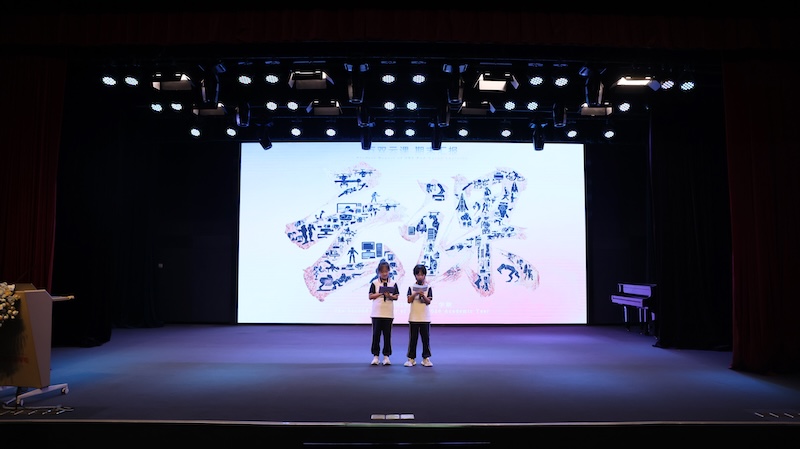
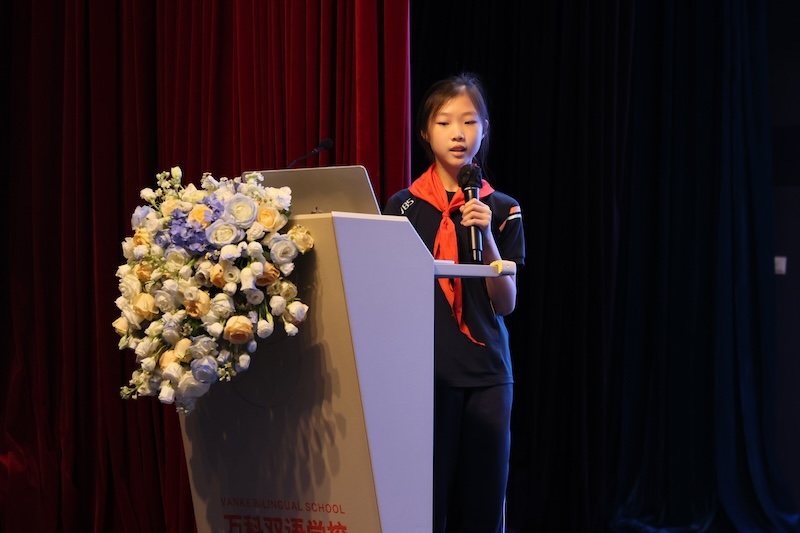
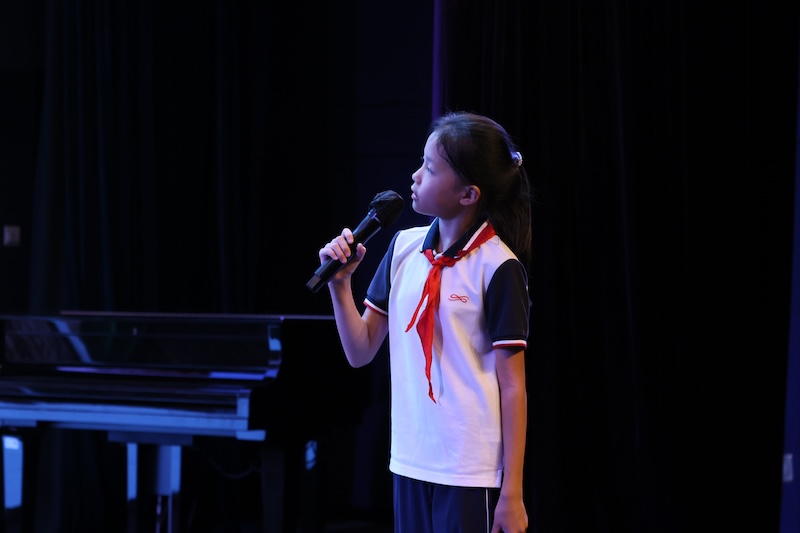
万双网讯 7月8日上午,万科双语学校剧场内洋溢着求知的热忱,三、四年级云课期末汇报会在此启幕。登台的12个班级代表,每人最初都揣着一个小小的“问号”——没有预设的标准答案,没有固定的探索路径,所有探索的起点,都是孩子们眼里那束忍不住要追根究底的光。
On the morning of July 8, the theater of Vanke Bilingual School was filled with the warmth of intellectual curiosity as the Grades 3 and 4 Cloud Class end-of-term report began. The 12 class representatives who took the stage each started with a tiny "question mark" in mind—no preset answers, no fixed paths of exploration. The starting point of every journey was simply that gleam in the children's eyes, an irrepressible urge to get to the bottom of things.
好奇是戳破“想当然”的小尖刺
Curiosity: The Little Thorn That Pokes Through "Taken-for-Granted" Assumptions
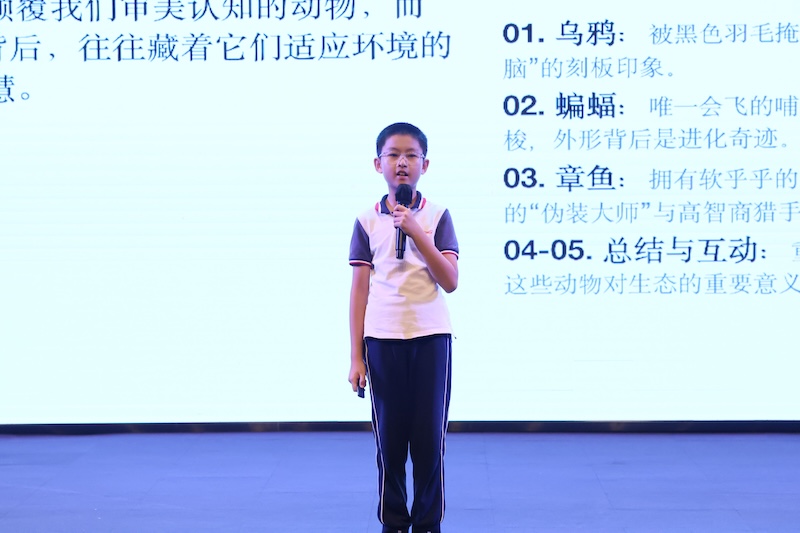
很多探索,都从推翻大人习以为常的“以为”开始。3C班的唐艺林一开始觉得蝙蝠“长得丑又吓人”,好奇它凭什么能在黑夜里自由飞行。查完资料后,他反而成了蝙蝠的“代言人”:它是唯一会飞的哺乳动物,靠回声定位当“暗夜活雷达”,一只蝙蝠一晚能抓上百只害虫,是实打实的生态功臣。汇报的最后,他笃定地说:“蝙蝠才是世界上最丑却最有价值的动物。”—— 一份偏见,被好奇硬生生掰成了敬意。
Many explorations began by overturning what adults had long taken for granted. Tang Yilin from Class 3C initially thought bats were "ugly and scary," but became curious about how they managed to fly freely in the dark. After researching, he became a "spokesperson" for bats: they are the only flying mammals, using echolocation as their "night radar," with a single bat catching hundreds of pests in one night—true ecological heroes. At the end of his presentation, he declared with conviction: "Bats are the ugliest yet most valuable animals in the world." A prejudice, turned into respect by sheer curiosity.
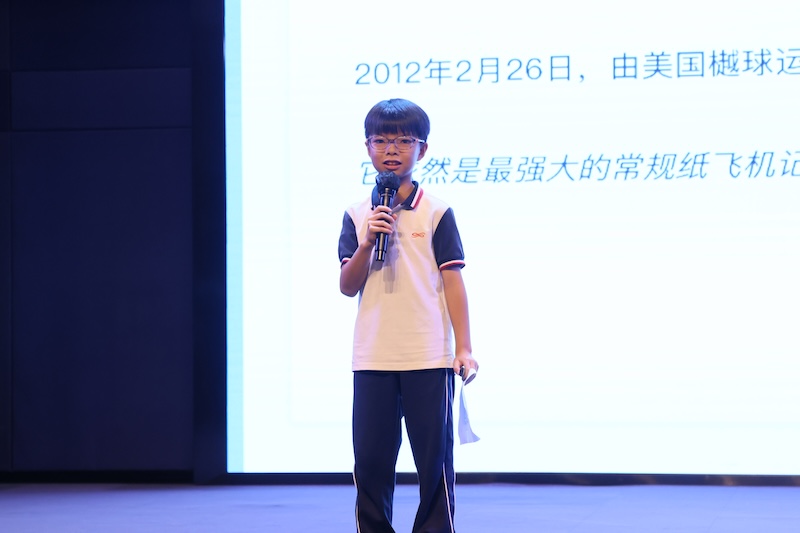
3D班的黄伟桐好奇更加“天马行空”:纸飞机怎么能飞69.14米?F1赛车上为什么装那么多摄像头?微观粒子到底能不能穿过墙壁?他把这些问号串成了一份“科技趣味清单”:苏珊纸飞机的世界纪录、F1每场部署近120个机位的直播逻辑、海森堡不确定原理下的“量子穿墙”、SpaceX火箭发射成本每公斤700美元的突破,连普通羽毛球装上陀螺仪变成“智能球”的创意都被他挖了出来。“原来科技不是实验室里的冷名词,全是好玩的小秘密。”他笑着说,眼里有光。
Huang Weitong from Class 3D had even more "wild" curiosities: How can a paper airplane fly 69.14 meters? Why are there so many cameras on an F1 car? Can microscopic particles really pass through walls? He strung these questions into a "Tech Fun List": the world record of the Susan paper airplane, the broadcast logic of nearly 120 camera positions per F1 race, "quantum tunneling" under Heisenberg's uncertainty principle, SpaceX's breakthrough of reducing rocket launch costs to $700 per kilogram, and even the creative idea of turning a regular badminton shuttlecock into a "smart shuttle" by adding a gyroscope. "Technology isn't just cold terminology in a lab—it's full of fun little secrets," he said with a smile, his eyes sparkling.
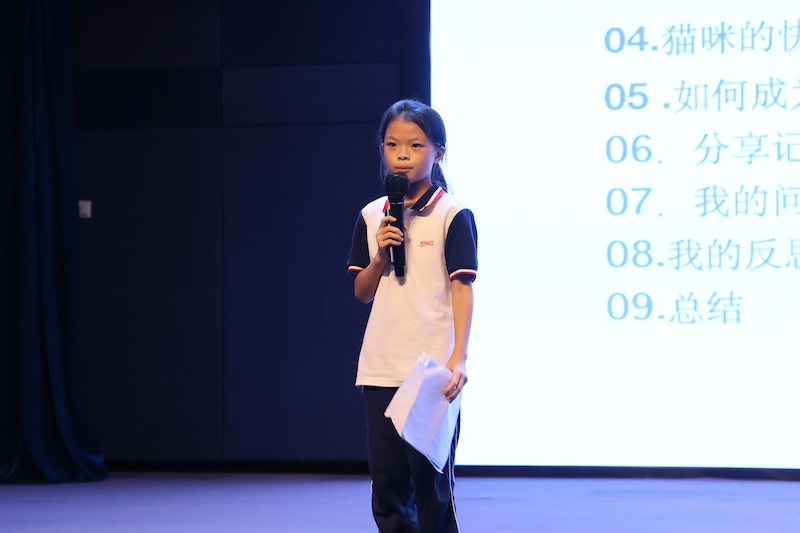
3G班的李品萱撸猫时被猫胡子扎了一下,好奇这东西又细又长到底有什么用。顺着问题翻了许多资料,才发现猫的胡子是一把“天然测量尺”,根部连接着敏感的神经,能帮它判断狭窄通道能不能钻过去。连肉垫的消音功能、瞳孔随光调节的机制,都是她之前从未留意过的“生存小机关”——原来每天抱在怀里的小生命,藏着那么多被忽略的智慧。
Li Pinxuan from Class 3G was pricked by her cat's whiskers while petting it and wondered what purpose those thin, long things served. Digging into the question, she discovered that a cat's whiskers are a "natural measuring tape," with sensitive nerves at the roots that help the cat determine whether a narrow space is passable. Even the sound-muffling function of paw pads and the pupil-adjustment mechanism in response to light were "survival tricks" she had never noticed before—so many overlooked secrets hidden in the little creature she held every day.
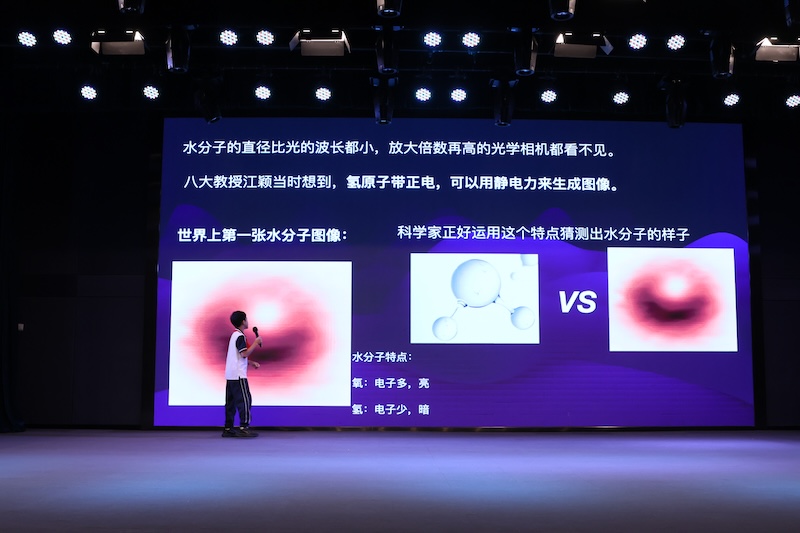
4F班的高自江盯着水杯发了半天呆,好奇水分子那么小,科学家到底是怎么看见的。原来水分子直径比光波还短,普通显微镜根本拍不到,北大教授靠“静电成像”技术才拍下了世界上第一张水分子高清图;而雪花六角的秘密,也能通过低温观测揭开。那些看不见的东西,早有办法被人类捕捉到——所谓“不可能”,只是还没找到方法而已。
Gao Zijiang from Class 4F stared at his water glass for a long time, wondering how scientists could actually see water molecules when they were so tiny. He learned that water molecules are smaller than the wavelength of light, making them invisible under ordinary microscopes—until a Peking University professor captured the world's first high-definition image of a water molecule using "electrostatic imaging" technology. And the secret behind a snowflake's six-pointed symmetry could be revealed through low-temperature observation. Things once thought invisible had long been captured by human ingenuity—the so-called "impossible" simply meant the method hadn't been found yet.
好奇是串起知识的“连线绳”
Curiosity: The Connecting Thread That Weaves Knowledge Together
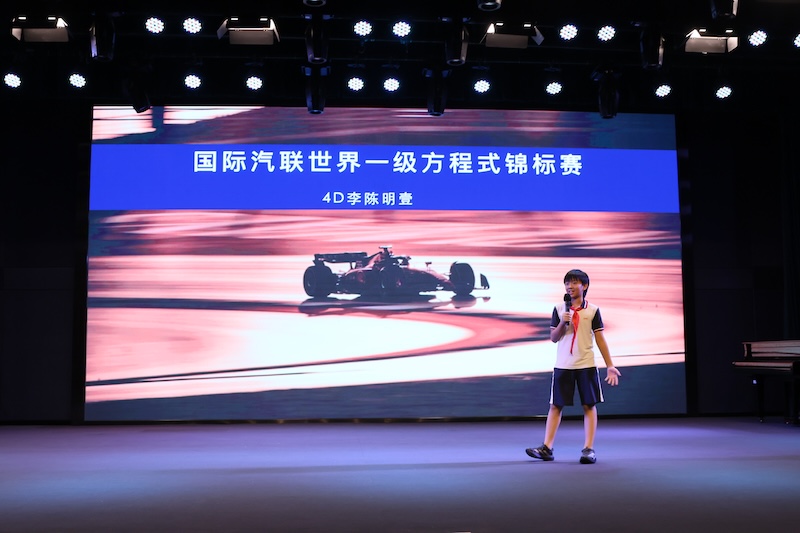
有些好奇,像一根线,拽着孩子把零散的知识点串成了有意思的知识网。4D班的李陈明壹看完F1比赛,好奇赛车为什么能贴地飞行。他不仅研究起了空气动力学、混合动力、机械抓地力三大核心原理,还顺着线索一路追溯汽车底盘的发展史:从1894年转向系统发明,到1935年液气悬挂出现,再到2004年主动悬挂落地——一百多年的技术迭代,都浓缩在一辆赛车的底盘里。他还特意整理了F1轮胎的“冷知识”:干地胎最佳工作温度是90到110摄氏度,赛前必须用暖胎毯预热,正赛必须至少更换两种配方的轮胎。“赛场上的每一秒快慢,都是无数细节堆出来的。”他总结道。
Some curiosities act like a thread, pulling children to connect scattered pieces of knowledge into an interesting web. Li Chenmingyi from Class 4D, after watching an F1 race, wondered why race cars could "fly" so close to the ground. He not only studied the three core principles—aerodynamics, hybrid power, and mechanical grip—but also traced the evolution of automotive chassis: from the invention of the steering system in 1894, to the appearance of hydropneumatic suspension in 1935, to the introduction of active suspension in 2004—over a century of technological iteration, all compressed into a race car's chassis. He also compiled some "cool facts" about F1 tires: the optimal working temperature for dry tires is 90–110°C, they must be pre-warmed with tire blankets before a race, and each race requires at least two different tire compounds. "Every split second on the track is built from countless details," he concluded.
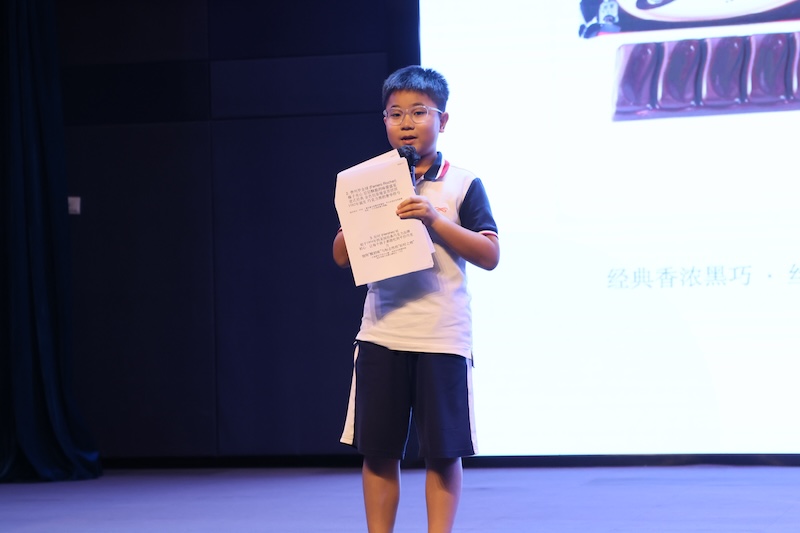
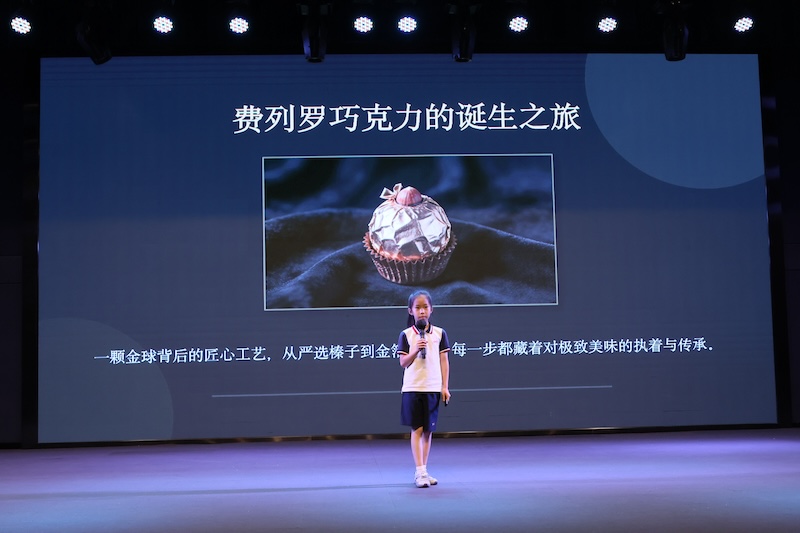
巧克力主题的小组们,更是把一颗可可豆的“前世今生”摸得清清楚楚。3E班的黄白羽好奇不同巧克力味道差在哪里,盘点了德芙、费列罗、好时、M&M's等九大主流品牌的口感、评分和市场格局,还揭秘了玛氏、费列罗、亿滋、雀巢“四大巧克力巨头”的行业版图。3I班的蔡悦则盯着费列罗的金球,好奇那层脆壳是怎么包上去的,把从榛子烘焙、威化制作、酱心调配到金箔包裹的六道制作工序背得滚瓜烂熟。
The chocolate-themed groups traced the "past and present" of a single cocoa bean with remarkable thoroughness. Huang Baiyu from Class 3E wondered why different chocolates tasted so different, and compared nine major brands—Dove, Ferrero, Hershey's, M&M's, and others—in terms of texture, ratings, and market positioning, even revealing the industry landscape dominated by the "Big Four": Mars, Ferrero, Mondelēz, and Nestlé. Cai Yue from Class 3I focused on Ferrero's golden ball, curious about how that crispy shell was applied, and memorized the six-step production process from hazelnut roasting, wafer making, and cream filling to gold foil wrapping.
4C班的余悦淇和郑青岚好奇巧克力最早是什么味道,顺着线索挖到了三千年的可可豆历史:奥尔梅克人最早发现可可果,玛雅人把它磨成粉加辣椒做成饮品,阿兹特克人把它当成货币,西班牙人改良配方加了糖和肉桂,直到1828年荷兰科学家提取出可可脂,固态巧克力才正式诞生。4G班的王子悦更绝,好奇巧克力能不能不用颜料就变彩色,最终搞懂了“光栅结构色”的原理——靠镭射膜压出纳米级光栅,光线反射就能变出彩虹色,完全不用化学颜料,做出五彩斑斓的黑巧克力。一颗小小的可可豆,被孩子们拆解成了化学、历史、经济、物理交织的立体课题。
Yu Yueqi and Zheng Qinglan from Class 4C wondered what chocolate originally tasted like, tracing the 3,000-year history of the cacao bean: the Olmecs first discovered the cacao fruit, the Maya ground it into powder and mixed it with chili to make a drink, the Aztecs used it as currency, the Spanish added sugar and cinnamon to improve the recipe, and it wasn't until 1828 that a Dutch scientist extracted cocoa butter, giving birth to solid chocolate. Wang Ziyue from Class 4G took it even further—wondering if chocolate could become colorful without paint, she eventually uncovered the principle of "structural color using gratings": by pressing a nano-scale diffraction grating onto a laser film, light reflection produces rainbow colors without any chemical pigments, creating brilliantly colored dark chocolate. A single cocoa bean had been dissected by the children into an interdisciplinary subject weaving together chemistry, history, economics, and physics.
好奇是沾着烟火气的“小念头”
Curiosity: The Little Spark Infused with Everyday Life
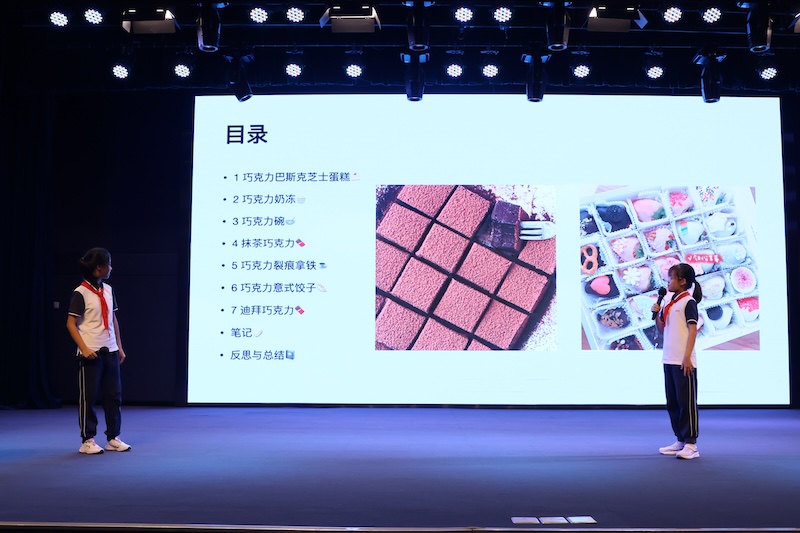
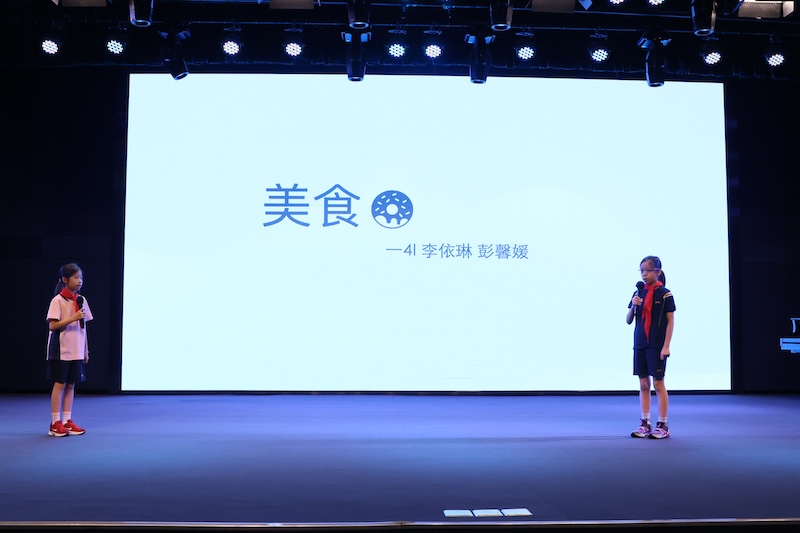
最动人的好奇,往往藏在咬下第一口甜品、挥出第一拍羽毛球的日常里。4E班的刘想想和陈奉依在甜品店看到巧克力巴斯克,好奇自己能不能做出来。最后整理出了巧克力巴斯克、迪拜巧克力、巧克力奶冻、巧克力意式饺子等七款甜品的详细教程——从配方到步骤,有模有样。4I班的李依琳和彭馨媛逛美食展时好奇巧克力除了吃还能做什么,不仅探索出了巧克力螃蟹、巧克力熟成牛排等新奇美食,还顺着线索查到了2008年入选国家级非物质文化遗产的糖画技艺,连“倒糖人儿”“糖灯影儿”的民间别称都记在了笔记本上。
The most touching curiosities often hide in everyday moments—the first bite of a dessert, the first swing of a badminton racket. Liu Xiangxiang and Chen Fengyi from Class 4E saw a chocolate Basque cheesecake in a dessert shop and wondered if they could make it themselves. They ended up compiling detailed tutorials for seven desserts, from chocolate Basque and Dubai chocolate to chocolate pudding and chocolate-filled Italian dumplings—complete with ingredients and steps, properly organized. Li Yilin and Peng Xinyuan from Class 4I, while exploring a food fair, wondered what else chocolate could be used for beyond eating. They not only discovered novel creations like chocolate crab and chocolate-aged steak but also traced the sugar-painting craft, which was included in China's national intangible cultural heritage list in 2008, even jotting down folk names like "sugar pourer" and "sugar shadow" in their notebooks.
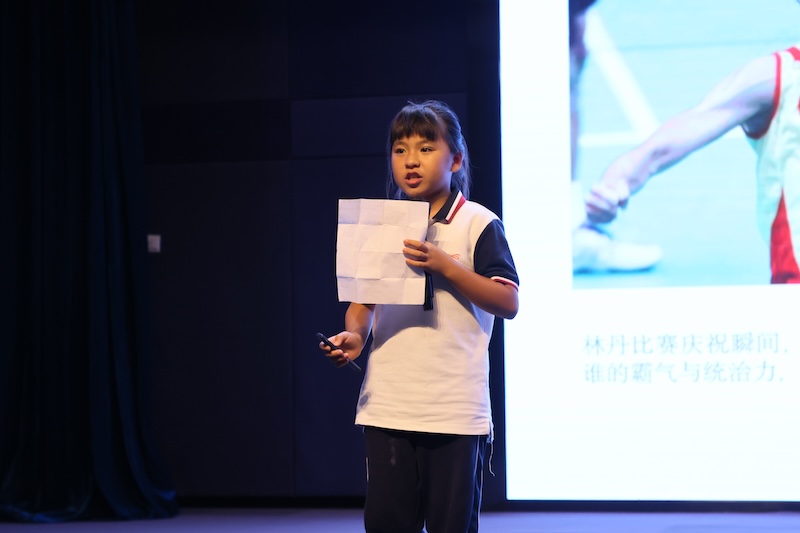
3F班的魏熙桐看完羽毛球经典比赛后,好奇林丹为什么总能赢。她不仅把“四大天王”的技术特点摸得门清,还拆解出了“蹬转发力、手腕下压、提前预判、步法连贯”的打球口诀,最后认真地说:“打羽毛球不能光看,得一遍一遍练,不然永远学不会。”——一个十岁的孩子,已经懂得了“知行合一”的朴素真理。
Wei Xitong from Class 3F, after watching a classic badminton match, wondered why Lin Dan always won. She not only thoroughly researched the technical characteristics of the "Four Kings" but also broke down the key moves: "push-turn power, wrist snap, early anticipation, and fluid footwork." She concluded seriously: "You can't learn badminton just by watching—you have to practice over and over, or you'll never get it." A ten-year-old had already grasped the simple truth of "unity of knowledge and action."
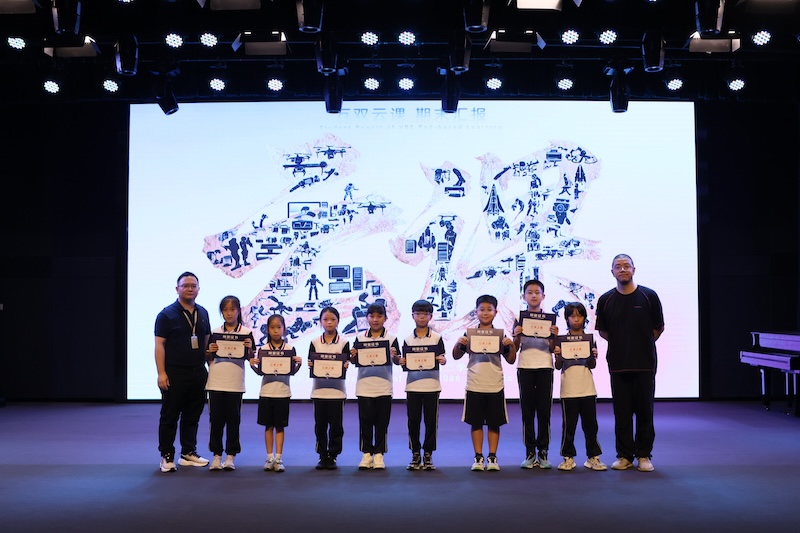
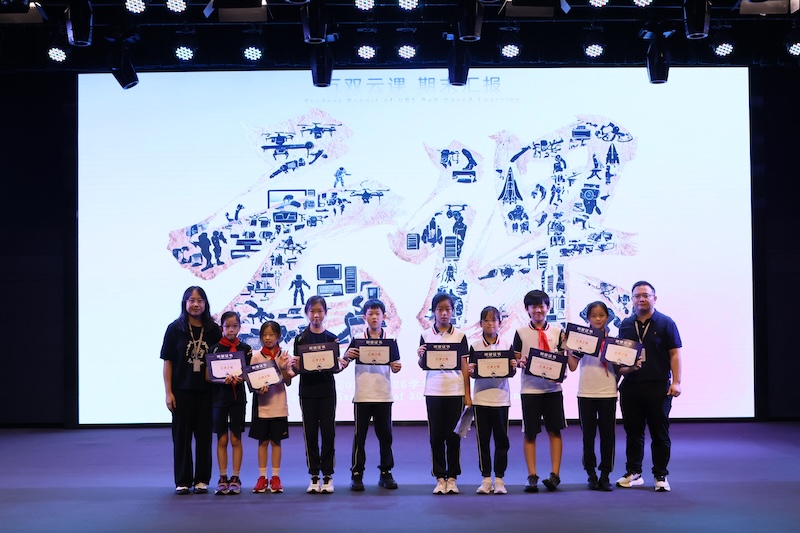
所有分享结束后,在场的学生代表们第一时间从“学力、管理、思考”三个自主学习核心维度完成线上即时评价,为每一位分享者送上最及时的反馈。颁奖环节刚结束,新的追问已在台下蔓延开来——“章鱼真的有三颗心脏吗?”“费列罗里到底有哪些原料?”“透明的水到底是怎么成像的?”旧的问号刚被拉直,新的好奇又冒了出来......
After all the presentations, student representatives in the audience completed an immediate online evaluation based on three core dimensions of independent learning—academic ability, self-management, and critical thinking—offering timely feedback to each speaker. As the award ceremony ended, new questions began to spread through the audience: "Do octopuses really have three hearts?" "What ingredients actually go into Ferrero Rocher?" "How is clear water imaged?" Old question marks had just been straightened, and new ones were already emerging...
在人工智能时代,教育的重点早已不是灌输知识,而是培养孩子借助工具获取信息、提出关键问题的能力。万科双语学校开设的万双云课,正是为这样的成长需求而生。每周的云课时间,学校配齐平板设备,整合优质线上资源,为孩子们打开一座没有边界的“数字图书馆”。每个孩子都可以根据自己的兴趣,自由选择想探索的主题,在主动学习中锻炼自我管理能力,建立终身学习的意识。课堂之外,云课更关注学习过程中学力的生长、思考的痕迹与习惯的养成,帮助孩子与电子设备建立健康而有效的关系。
In the age of artificial intelligence, the focus of education is no longer about pouring in knowledge, but about cultivating children's ability to access information through tools and ask critical questions. Vanke Bilingual School's Cloud Class is designed precisely for this kind of growth. Each week during Cloud Class time, the school provides tablet devices and curates high-quality online resources, opening the door to a boundless "digital library" for the children. Every child can freely choose topics to explore based on their own interests, developing self-management skills through active learning and building a lifelong learning mindset. Beyond the classroom, Cloud Class places even greater emphasis on the growth of academic ability, traces of thinking, and the cultivation of habits during the learning process, helping children establish a healthy and effective relationship with digital devices.
今天的小问号,会变成明天的新课题;今天眼里的光,会变成未来走得远的底气。这大概就是云课最本真的意义:守护好每一粒好奇的种子,浇灌它长成属于自己的大树。
Today's little questions will become tomorrow's new challenges; today's spark of curiosity will become the confidence to go far in the future. Perhaps that is the truest meaning of Cloud Class: protecting every seed of curiosity and nurturing it into a tree that belongs uniquely to each child.
资料提供 / 王东、彭平
翻译 / 于彬
排版 / 马葳
万双网讯 7月8日上午,万科双语学校剧场内洋溢着求知的热忱,三、四年级云课期末汇报会在此启幕。登台的12个班级代表,每人最初都揣着一个小小的“问号”——没有预设的标准答案,没有固定的探索路径,所有探索的起点,都是孩子们眼里那束忍不住要追根究底的光。
On the morning of July 8, the theater of Vanke Bilingual School was filled with the warmth of intellectual curiosity as the Grades 3 and 4 Cloud Class end-of-term report began. The 12 class representatives who took the stage each started with a tiny "question mark" in mind—no preset answers, no fixed paths of exploration. The starting point of every journey was simply that gleam in the children's eyes, an irrepressible urge to get to the bottom of things.
好奇是戳破“想当然”的小尖刺
Curiosity: The Little Thorn That Pokes Through "Taken-for-Granted" Assumptions
很多探索,都从推翻大人习以为常的“以为”开始。3C班的唐艺林一开始觉得蝙蝠“长得丑又吓人”,好奇它凭什么能在黑夜里自由飞行。查完资料后,他反而成了蝙蝠的“代言人”:它是唯一会飞的哺乳动物,靠回声定位当“暗夜活雷达”,一只蝙蝠一晚能抓上百只害虫,是实打实的生态功臣。汇报的最后,他笃定地说:“蝙蝠才是世界上最丑却最有价值的动物。”—— 一份偏见,被好奇硬生生掰成了敬意。
Many explorations began by overturning what adults had long taken for granted. Tang Yilin from Class 3C initially thought bats were "ugly and scary," but became curious about how they managed to fly freely in the dark. After researching, he became a "spokesperson" for bats: they are the only flying mammals, using echolocation as their "night radar," with a single bat catching hundreds of pests in one night—true ecological heroes. At the end of his presentation, he declared with conviction: "Bats are the ugliest yet most valuable animals in the world." A prejudice, turned into respect by sheer curiosity.
3D班的黄伟桐好奇更加“天马行空”:纸飞机怎么能飞69.14米?F1赛车上为什么装那么多摄像头?微观粒子到底能不能穿过墙壁?他把这些问号串成了一份“科技趣味清单”:苏珊纸飞机的世界纪录、F1每场部署近120个机位的直播逻辑、海森堡不确定原理下的“量子穿墙”、SpaceX火箭发射成本每公斤700美元的突破,连普通羽毛球装上陀螺仪变成“智能球”的创意都被他挖了出来。“原来科技不是实验室里的冷名词,全是好玩的小秘密。”他笑着说,眼里有光。
Huang Weitong from Class 3D had even more "wild" curiosities: How can a paper airplane fly 69.14 meters? Why are there so many cameras on an F1 car? Can microscopic particles really pass through walls? He strung these questions into a "Tech Fun List": the world record of the Susan paper airplane, the broadcast logic of nearly 120 camera positions per F1 race, "quantum tunneling" under Heisenberg's uncertainty principle, SpaceX's breakthrough of reducing rocket launch costs to $700 per kilogram, and even the creative idea of turning a regular badminton shuttlecock into a "smart shuttle" by adding a gyroscope. "Technology isn't just cold terminology in a lab—it's full of fun little secrets," he said with a smile, his eyes sparkling.
3G班的李品萱撸猫时被猫胡子扎了一下,好奇这东西又细又长到底有什么用。顺着问题翻了许多资料,才发现猫的胡子是一把“天然测量尺”,根部连接着敏感的神经,能帮它判断狭窄通道能不能钻过去。连肉垫的消音功能、瞳孔随光调节的机制,都是她之前从未留意过的“生存小机关”——原来每天抱在怀里的小生命,藏着那么多被忽略的智慧。
Li Pinxuan from Class 3G was pricked by her cat's whiskers while petting it and wondered what purpose those thin, long things served. Digging into the question, she discovered that a cat's whiskers are a "natural measuring tape," with sensitive nerves at the roots that help the cat determine whether a narrow space is passable. Even the sound-muffling function of paw pads and the pupil-adjustment mechanism in response to light were "survival tricks" she had never noticed before—so many overlooked secrets hidden in the little creature she held every day.
4F班的高自江盯着水杯发了半天呆,好奇水分子那么小,科学家到底是怎么看见的。原来水分子直径比光波还短,普通显微镜根本拍不到,北大教授靠“静电成像”技术才拍下了世界上第一张水分子高清图;而雪花六角的秘密,也能通过低温观测揭开。那些看不见的东西,早有办法被人类捕捉到——所谓“不可能”,只是还没找到方法而已。
Gao Zijiang from Class 4F stared at his water glass for a long time, wondering how scientists could actually see water molecules when they were so tiny. He learned that water molecules are smaller than the wavelength of light, making them invisible under ordinary microscopes—until a Peking University professor captured the world's first high-definition image of a water molecule using "electrostatic imaging" technology. And the secret behind a snowflake's six-pointed symmetry could be revealed through low-temperature observation. Things once thought invisible had long been captured by human ingenuity—the so-called "impossible" simply meant the method hadn't been found yet.
好奇是串起知识的“连线绳”
Curiosity: The Connecting Thread That Weaves Knowledge Together
有些好奇,像一根线,拽着孩子把零散的知识点串成了有意思的知识网。4D班的李陈明壹看完F1比赛,好奇赛车为什么能贴地飞行。他不仅研究起了空气动力学、混合动力、机械抓地力三大核心原理,还顺着线索一路追溯汽车底盘的发展史:从1894年转向系统发明,到1935年液气悬挂出现,再到2004年主动悬挂落地——一百多年的技术迭代,都浓缩在一辆赛车的底盘里。他还特意整理了F1轮胎的“冷知识”:干地胎最佳工作温度是90到110摄氏度,赛前必须用暖胎毯预热,正赛必须至少更换两种配方的轮胎。“赛场上的每一秒快慢,都是无数细节堆出来的。”他总结道。
Some curiosities act like a thread, pulling children to connect scattered pieces of knowledge into an interesting web. Li Chenmingyi from Class 4D, after watching an F1 race, wondered why race cars could "fly" so close to the ground. He not only studied the three core principles—aerodynamics, hybrid power, and mechanical grip—but also traced the evolution of automotive chassis: from the invention of the steering system in 1894, to the appearance of hydropneumatic suspension in 1935, to the introduction of active suspension in 2004—over a century of technological iteration, all compressed into a race car's chassis. He also compiled some "cool facts" about F1 tires: the optimal working temperature for dry tires is 90–110°C, they must be pre-warmed with tire blankets before a race, and each race requires at least two different tire compounds. "Every split second on the track is built from countless details," he concluded.
巧克力主题的小组们,更是把一颗可可豆的“前世今生”摸得清清楚楚。3E班的黄白羽好奇不同巧克力味道差在哪里,盘点了德芙、费列罗、好时、M&M's等九大主流品牌的口感、评分和市场格局,还揭秘了玛氏、费列罗、亿滋、雀巢“四大巧克力巨头”的行业版图。3I班的蔡悦则盯着费列罗的金球,好奇那层脆壳是怎么包上去的,把从榛子烘焙、威化制作、酱心调配到金箔包裹的六道制作工序背得滚瓜烂熟。
The chocolate-themed groups traced the "past and present" of a single cocoa bean with remarkable thoroughness. Huang Baiyu from Class 3E wondered why different chocolates tasted so different, and compared nine major brands—Dove, Ferrero, Hershey's, M&M's, and others—in terms of texture, ratings, and market positioning, even revealing the industry landscape dominated by the "Big Four": Mars, Ferrero, Mondelēz, and Nestlé. Cai Yue from Class 3I focused on Ferrero's golden ball, curious about how that crispy shell was applied, and memorized the six-step production process from hazelnut roasting, wafer making, and cream filling to gold foil wrapping.
4C班的余悦淇和郑青岚好奇巧克力最早是什么味道,顺着线索挖到了三千年的可可豆历史:奥尔梅克人最早发现可可果,玛雅人把它磨成粉加辣椒做成饮品,阿兹特克人把它当成货币,西班牙人改良配方加了糖和肉桂,直到1828年荷兰科学家提取出可可脂,固态巧克力才正式诞生。4G班的王子悦更绝,好奇巧克力能不能不用颜料就变彩色,最终搞懂了“光栅结构色”的原理——靠镭射膜压出纳米级光栅,光线反射就能变出彩虹色,完全不用化学颜料,做出五彩斑斓的黑巧克力。一颗小小的可可豆,被孩子们拆解成了化学、历史、经济、物理交织的立体课题。
Yu Yueqi and Zheng Qinglan from Class 4C wondered what chocolate originally tasted like, tracing the 3,000-year history of the cacao bean: the Olmecs first discovered the cacao fruit, the Maya ground it into powder and mixed it with chili to make a drink, the Aztecs used it as currency, the Spanish added sugar and cinnamon to improve the recipe, and it wasn't until 1828 that a Dutch scientist extracted cocoa butter, giving birth to solid chocolate. Wang Ziyue from Class 4G took it even further—wondering if chocolate could become colorful without paint, she eventually uncovered the principle of "structural color using gratings": by pressing a nano-scale diffraction grating onto a laser film, light reflection produces rainbow colors without any chemical pigments, creating brilliantly colored dark chocolate. A single cocoa bean had been dissected by the children into an interdisciplinary subject weaving together chemistry, history, economics, and physics.
好奇是沾着烟火气的“小念头”
Curiosity: The Little Spark Infused with Everyday Life
最动人的好奇,往往藏在咬下第一口甜品、挥出第一拍羽毛球的日常里。4E班的刘想想和陈奉依在甜品店看到巧克力巴斯克,好奇自己能不能做出来。最后整理出了巧克力巴斯克、迪拜巧克力、巧克力奶冻、巧克力意式饺子等七款甜品的详细教程——从配方到步骤,有模有样。4I班的李依琳和彭馨媛逛美食展时好奇巧克力除了吃还能做什么,不仅探索出了巧克力螃蟹、巧克力熟成牛排等新奇美食,还顺着线索查到了2008年入选国家级非物质文化遗产的糖画技艺,连“倒糖人儿”“糖灯影儿”的民间别称都记在了笔记本上。
The most touching curiosities often hide in everyday moments—the first bite of a dessert, the first swing of a badminton racket. Liu Xiangxiang and Chen Fengyi from Class 4E saw a chocolate Basque cheesecake in a dessert shop and wondered if they could make it themselves. They ended up compiling detailed tutorials for seven desserts, from chocolate Basque and Dubai chocolate to chocolate pudding and chocolate-filled Italian dumplings—complete with ingredients and steps, properly organized. Li Yilin and Peng Xinyuan from Class 4I, while exploring a food fair, wondered what else chocolate could be used for beyond eating. They not only discovered novel creations like chocolate crab and chocolate-aged steak but also traced the sugar-painting craft, which was included in China's national intangible cultural heritage list in 2008, even jotting down folk names like "sugar pourer" and "sugar shadow" in their notebooks.
3F班的魏熙桐看完羽毛球经典比赛后,好奇林丹为什么总能赢。她不仅把“四大天王”的技术特点摸得门清,还拆解出了“蹬转发力、手腕下压、提前预判、步法连贯”的打球口诀,最后认真地说:“打羽毛球不能光看,得一遍一遍练,不然永远学不会。”——一个十岁的孩子,已经懂得了“知行合一”的朴素真理。
Wei Xitong from Class 3F, after watching a classic badminton match, wondered why Lin Dan always won. She not only thoroughly researched the technical characteristics of the "Four Kings" but also broke down the key moves: "push-turn power, wrist snap, early anticipation, and fluid footwork." She concluded seriously: "You can't learn badminton just by watching—you have to practice over and over, or you'll never get it." A ten-year-old had already grasped the simple truth of "unity of knowledge and action."
所有分享结束后,在场的学生代表们第一时间从“学力、管理、思考”三个自主学习核心维度完成线上即时评价,为每一位分享者送上最及时的反馈。颁奖环节刚结束,新的追问已在台下蔓延开来——“章鱼真的有三颗心脏吗?”“费列罗里到底有哪些原料?”“透明的水到底是怎么成像的?”旧的问号刚被拉直,新的好奇又冒了出来......
After all the presentations, student representatives in the audience completed an immediate online evaluation based on three core dimensions of independent learning—academic ability, self-management, and critical thinking—offering timely feedback to each speaker. As the award ceremony ended, new questions began to spread through the audience: "Do octopuses really have three hearts?" "What ingredients actually go into Ferrero Rocher?" "How is clear water imaged?" Old question marks had just been straightened, and new ones were already emerging...
在人工智能时代,教育的重点早已不是灌输知识,而是培养孩子借助工具获取信息、提出关键问题的能力。万科双语学校开设的万双云课,正是为这样的成长需求而生。每周的云课时间,学校配齐平板设备,整合优质线上资源,为孩子们打开一座没有边界的“数字图书馆”。每个孩子都可以根据自己的兴趣,自由选择想探索的主题,在主动学习中锻炼自我管理能力,建立终身学习的意识。课堂之外,云课更关注学习过程中学力的生长、思考的痕迹与习惯的养成,帮助孩子与电子设备建立健康而有效的关系。
In the age of artificial intelligence, the focus of education is no longer about pouring in knowledge, but about cultivating children's ability to access information through tools and ask critical questions. Vanke Bilingual School's Cloud Class is designed precisely for this kind of growth. Each week during Cloud Class time, the school provides tablet devices and curates high-quality online resources, opening the door to a boundless "digital library" for the children. Every child can freely choose topics to explore based on their own interests, developing self-management skills through active learning and building a lifelong learning mindset. Beyond the classroom, Cloud Class places even greater emphasis on the growth of academic ability, traces of thinking, and the cultivation of habits during the learning process, helping children establish a healthy and effective relationship with digital devices.
今天的小问号,会变成明天的新课题;今天眼里的光,会变成未来走得远的底气。这大概就是云课最本真的意义:守护好每一粒好奇的种子,浇灌它长成属于自己的大树。
Today's little questions will become tomorrow's new challenges; today's spark of curiosity will become the confidence to go far in the future. Perhaps that is the truest meaning of Cloud Class: protecting every seed of curiosity and nurturing it into a tree that belongs uniquely to each child.
资料提供 / 王东、彭平
翻译 / 于彬
排版 / 马葳

让孩子站在未来中央
地址:深圳市龙华区民治街道华南路80号
Tel:0755-66866333
Email:p-vbs@msedu.email

办学理念:让孩子站在未来中央
培养(成长)目标:培养(成为)身体健康、人格健全、学力卓越,具有家国情怀和国际视野, 敢于创造美好未来的中国公民,为开创更美好、更和平的世界贡献力量。 地址:深圳市龙华区民治街道华南路80号 电话:0755-66866333 http://vbs.vanke.com Vanke Bilingual School, Longhua District, Shenzhen Educational Idea: Let our children experience the future. Training objectives: Our students will become citizens of China with good physical health, sound personality, excellent academic abilities, patriotism, international vision and the courage to create a better future and a more peaceful world. Address: No.80 Huanan Road, Minzhi Sub-district, Longhua District, Shenzhen Contact: 0755-66866333 http://vbs.vanke.com
学校网站二维码
QR code of school website
学校公众号二维码
QR code of school official account
