中文 | English
 新闻详情
新闻详情
新闻详情
新闻详情

万双网讯 2025年12月8日至15日,万科双语学校成功开展了“博悟深圳·薪火相传”博物馆进校园活动。学校携手深圳博物馆,通过历史展板与历史讲堂两种讲解形式,将古代深圳的历史生动呈现在学生面前。
From December 8th to 15th, 2025, Vanke Bilingual School launched the “Understanding Shenzhen through Museums · Passing on the Cultural Torch” museum-on-campus activity. In collaboration with Shenzhen Museum, the school vividly presented the history of ancient Shenzhen to students through two forms of interpretation: historical exhibition boards and lecture sessions.
展板述往昔,少年讲深圳
Exhibition Boards Tell the Past, and Young Guides Narrate Shenzhen’s History
本次活动以学生志愿讲解这一生动的方式拉开序幕。12月8日晚上6:00,1-6年级的讲解员们率先登场,在各自展板前为同学们生动讲述深圳的历史脉络。随后,7-9年级的讲解员们接力上阵,为同学们展开古代深圳的历史画卷。
The activity kicked off with a dynamic format: student volunteer narrators. At 6:00 p.m. on December 8th, student narrators from Grades 1 to 6 took the lead, standing in front of their respective exhibition boards to vividly share the historical context of Shenzhen with their peers. Later, student narrators from Grades 7 to 9 took over, unfolding a panorama of ancient Shenzhen’s history for the students.
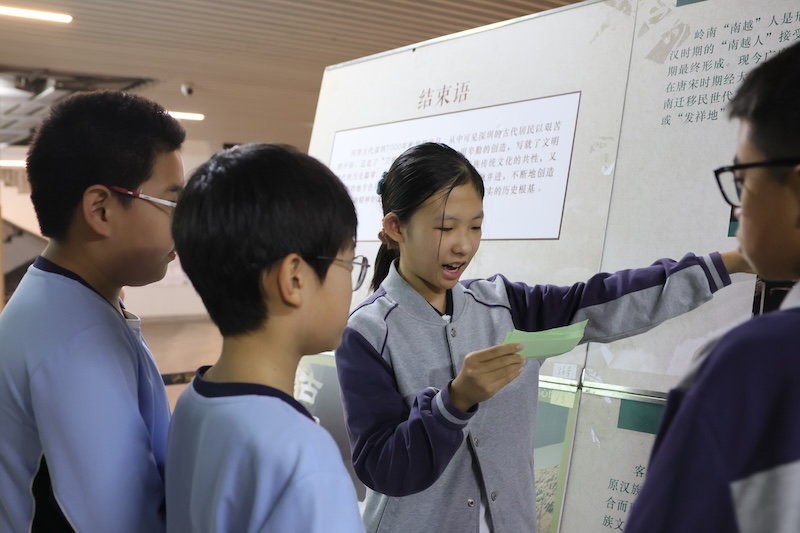
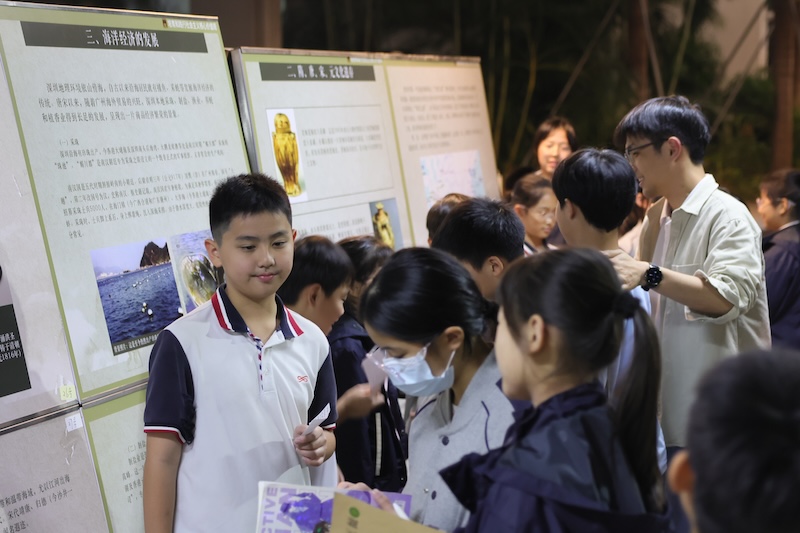
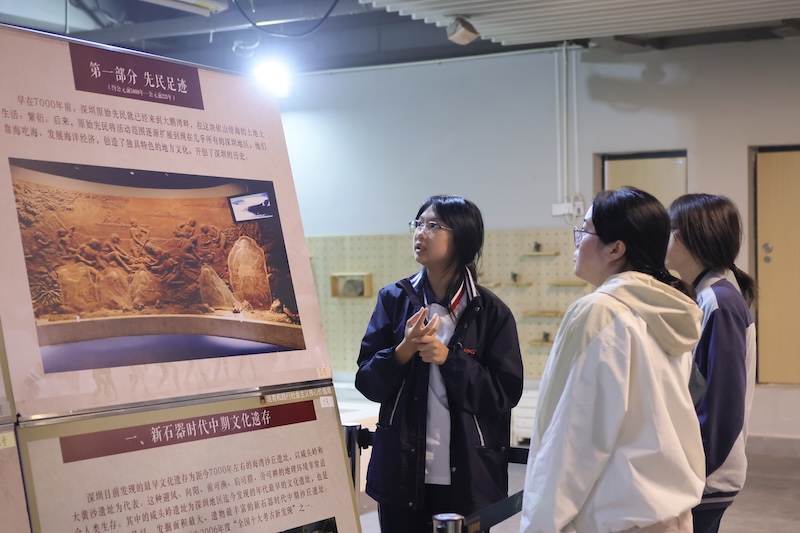
本次展板内容的时间跨度从新石器时代直至明清时期,涵盖了深圳的政治区划沿革、经济发展与移民历史等多个方面。在小讲解员们专业而投入的讲述中,遥远的古代深圳史变得亲切可感。参观学生也热情高涨,纷纷手持纸笔,认真记录脚下这片土地的过往。
The content of the exhibition boards covered a time span from the Neolithic Age to the Ming and Qing dynasties, encompassing the evolution of Shenzhen’s administrative divisions, economic development, and immigration history. Through the professional and engaging narration of the young guides, the distant history of ancient Shenzhen became approachable and relatable. Visiting students were also enthusiastic: they held notebooks and pens, carefully jotting down the past of the land that they were standing on.
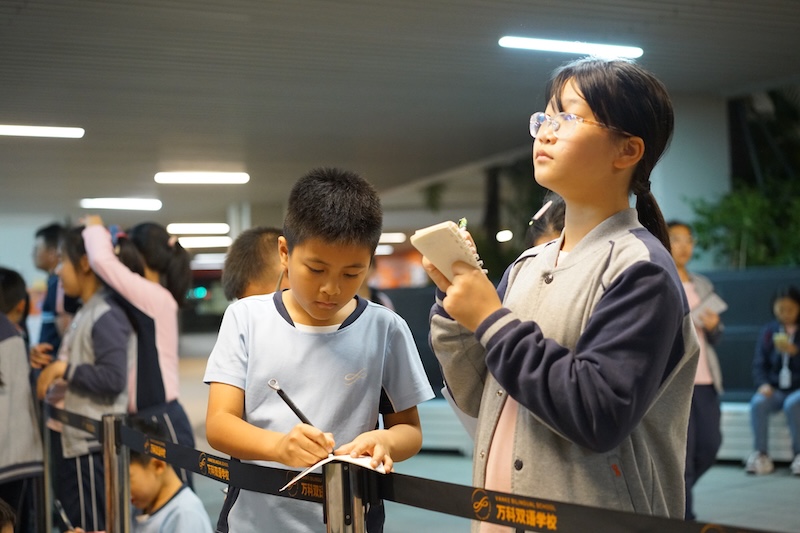
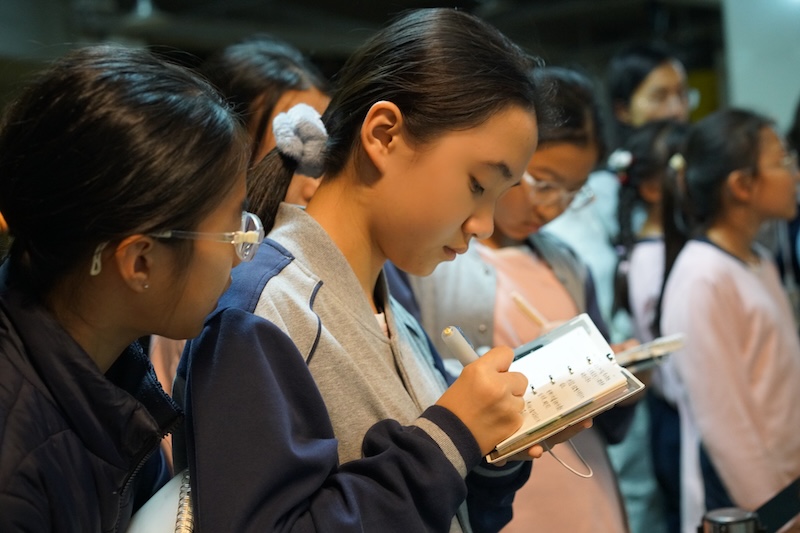
展板讲解活动从12月8日持续至11日,每晚6:00准时开始,6:40左右结束。连日来,前来聆听的学生络绎不绝,小讲解员们始终尽职尽责,让历史不再遥远,让知识充满温度。
The exhibition board interpretation activity ran from December 8th to 11th, starting promptly at 6:00 p.m. and ending around 6:40 p.m. each evening. On these days, students visited in a steady stream to listen, and the young narrators remained dedicated to their roles, making history that was no longer distant warm with passion.
专家启新知,互动探渊源
Experts Ignite New Knowledge, Interactive Sessions Explore Origins
12月15日,学校特邀深圳博物馆优秀讲解员张勇刚老师,为同学们带来一场题为“古代深圳史”的专题讲座。每个班级选派五名学生代表至剧场现场聆听,其余同学则在教室通过直播同步参与。
On December 15, the school specially invited Mr. Zhang Yonggang, an outstanding narrator from Shenzhen Museum, to deliver a special lecture titled “The History of Ancient Shenzhen”. Each class selected five student representatives to attend the lecture in the auditorium in person, while the rest watched via live broadcast in their classrooms.
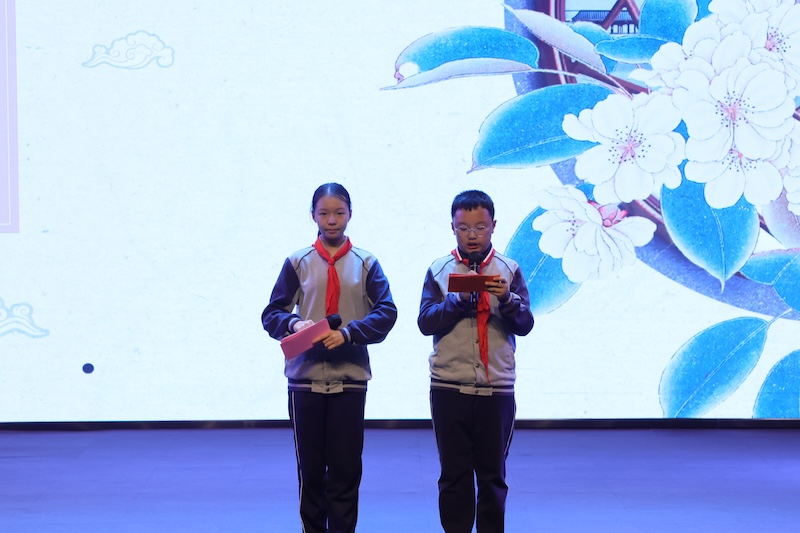
讲座伊始,张老师首先提问:“深圳何时开始有人类活动?”同学们踊跃发言后,他引导大家认识到历史结论需以证据为基础。随后,他从咸头岭遗址讲起,将深圳的人类活动史上溯至七千年前。
At the start of the lecture, Mr. Zhang posed a question: “When did human activity begin in Shenzhen?” After students spoke up enthusiastically, he guided them to understand that historical conclusions must be based on evidence. He then began with the Xiantouling Ruins, tracing the origin of human activity in Shenzhen back 7,000 years ago.
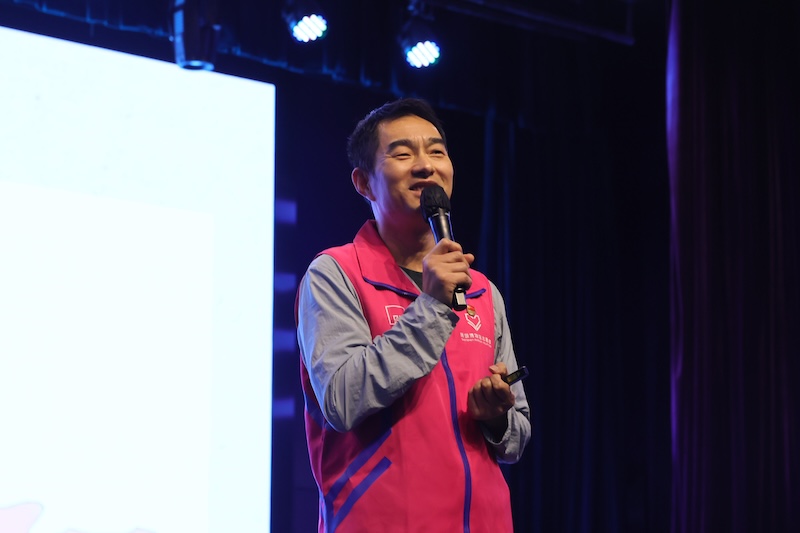
张老师进而阐释了文明的三大标志,指出深圳的文明史始于秦始皇统一岭南,从此有了文字记载。讲述汉代历史时,他提到汉武帝设立盐官,在南海郡番禺县下设“东官”,管理深圳地区的盐业生产。至东晋时期,朝廷设立东官郡,郡治便位于今天的深圳南头古城——这标志着深圳城市历史的开端。
Mr. Zhang further explained the three major symbols of civilization, pointing out that Shenzhen’s civilized history began with the unification of Lingnan by Qin Shihuang, after which written records of the region emerged. When talking about the Han Dynasty, he mentioned that Emperor Wu of the Han Dynasty established a salt official, and “Dongguan” was set up under the Panyu County of Nanhai Commandery to oversee salt production in the Shenzhen area. During the Eastern Jin Dynasty, the imperial court established the Dongguan Commandery, whose administrative seat was located in today’s Nantou Ancient Town in Shenzhen – marking the beginning of Shenzhen’s urban history.
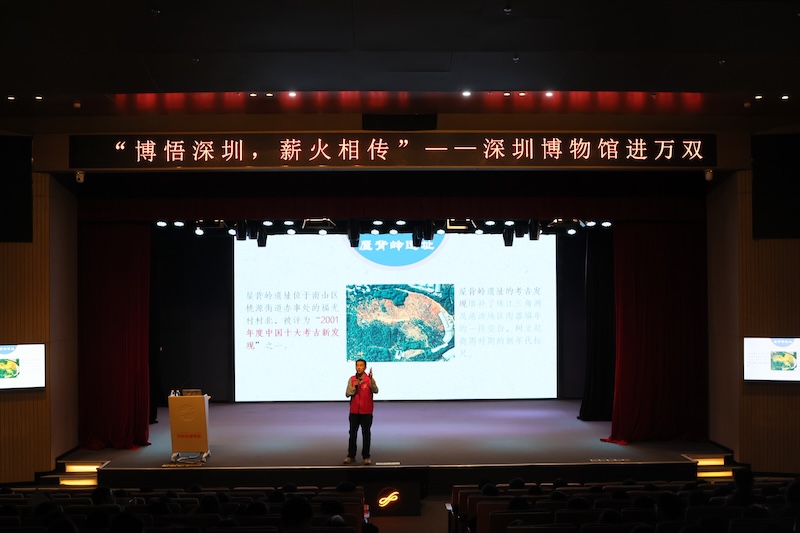
谈及唐代,张老师解释道,因安史之乱影响,宝安县被撤,改设东莞县,县治也从南头迁至莞城。同时,由于北方战乱导致陆上丝绸之路受阻,海上丝绸之路得以发展。深圳作为珠江口门户,城市也因此获得一定发展。
Regarding the Tang Dynasty, Mr. Zhang explained that due to the impact of the An Lushan Rebellion, Bao’an County was abolished and replaced by Dongguan County, with the county seat moved from Nantou to Guancheng. Meanwhile, warfare in northern China disrupted the land-based Silk Road, leading to the development of the Maritime Silk Road. As a gateway to the Pearl River Estuary, Shenzhen thus achieved some development during this period.
在系统梳理从先秦到明清的历史沿革后,张老师还从经济角度介绍了古代深圳的几大支柱产业,并展示了当地出土的重要文物——东汉时期的“九九乘法口诀”刻砖。
After systematically reviewing the historical evolution from the pre-Qin period to the Ming and Qing dynasties, Mr. Zhang also introduced the major pillar industries of ancient Shenzhen from an economic perspective and displayed an important cultural relic that was unearthed locally: a brick inscribed with the “Nine-Nine Multiplication Table” from the Eastern Han Dynasty.
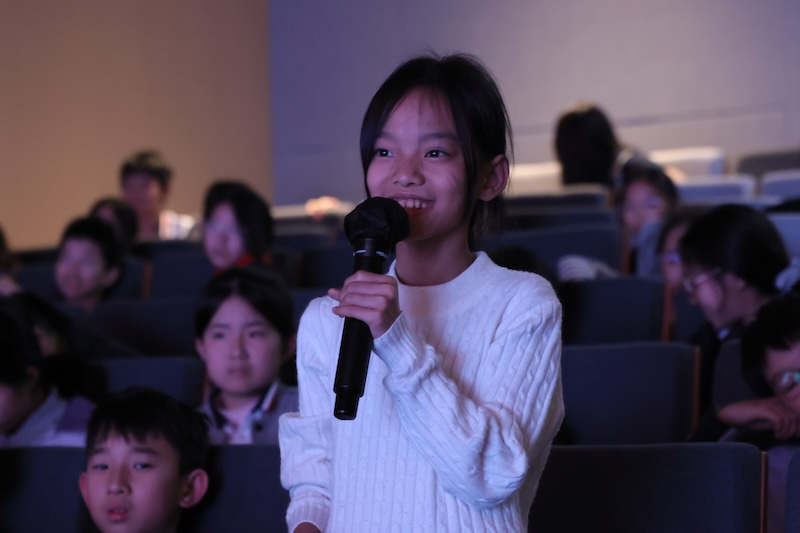
互动环节中,有学生提问:“‘深圳’这个名字是怎么来的?”张老师耐心解答:“‘圳’指田边的水沟,‘深’形容其深度,合起来意为‘深水沟’,反映了古代深圳的农业地理特征。”
During the interactive session, a student asked, “How did the name ‘Shenzhen’ come about?” Mr. Zhang patiently explained: “ ‘Zhen’ refers to a ditch beside farmland, and ‘Shen’ describes its depth; together, ‘Shenzhen’ means ‘a deep ditch,’ reflecting the agricultural and geographical characteristics of ancient Shenzhen.”
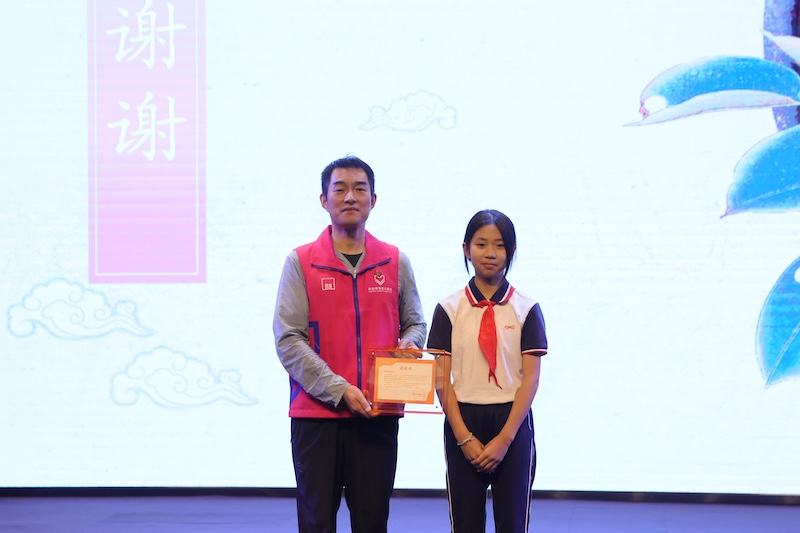
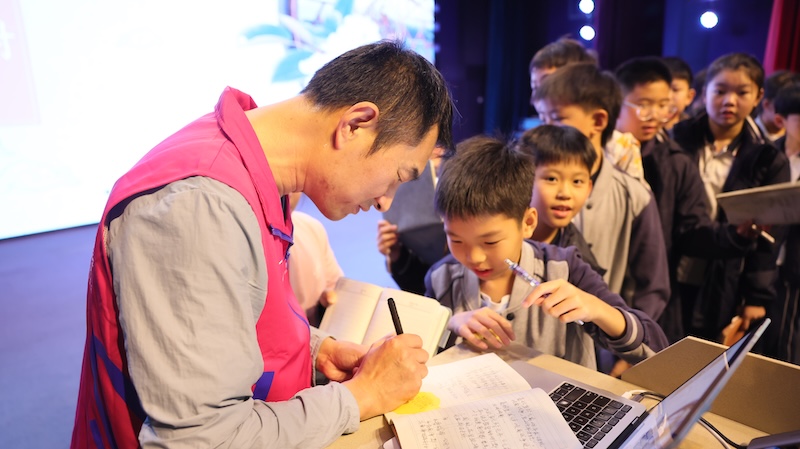
讲座尾声,学生代表向张勇刚老师赠送荣誉证书,以感谢他的精彩分享。全场掌声中,历史大讲堂圆满结束。活动后,学生们热情不减,纷纷上台请张老师签名留念。
At the end of the lecture, student representatives presented a certificate of honor to Mr. Zhang Yonggang in gratitude for his wonderful lecture. Amidst applause from the audience, the history lecture session concluded. After the activity, students remained enthusiastic and took turns going on stage to ask Mr. Zhang to sign autographs as a memento.
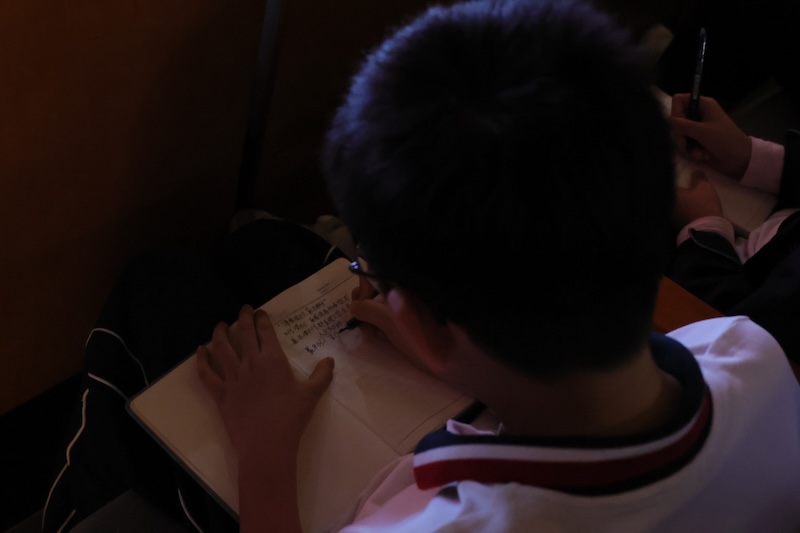
在参与讲座的过程中,学生们将自己的感想记录了下来,放学时将其贴在了展示板上,以这种方式分享自己的心得体会。同时也有学生用日记的形式记录下了自己的想法:“文化是城市的灵魂,作为深圳少年,我们要传承本土文化,守护城市记忆,让这份文化在新时代绽放更耀眼的光芒。”这一幕生动反映了本次活动已在学生心中埋下了探索身边历史的种子。
During the lecture, students recorded their thoughts and posted them on the display board after school to share their insights. Some also documented their reflections in diaries: “Culture is the soul of a city. As young people of Shenzhen, we must inherit local culture, safeguard the city’s memories, and let our culture shine more brilliantly in the new era.” This vividly shows that the activity has successfully sown the seeds of desire for exploring the history around them.
万科双语学校的历史课从小学开始开设,一至六年级每周一节。这也是学校坚守“身体健康、人格健全、学力卓越,具有家国情怀和国际视野,敢于创造美好未来的中国公民”这一培养(成长)目标的鲜活体现。作为课程的延伸,本次博物馆进校园活动不仅激发了学生们对深圳历史乃至中外历史的好奇心,拓宽了他们的认知视野,还在潜移默化中涵养了关注身边历史、心系家园的情怀,更让学生们认识到每个人都是自己历史的创造者。
Vanke Bilingual School offers history classes throughout primary school, with one class per week for Grades 1 to 6. This is a vivid reflection of the school’s commitment to its educational goal: “nurturing Chinese citizens who are physically healthy, have sound personalities, excellent academic abilities, a sense of national pride, international perspective, and the courage to create a better future.” As an extension of the curriculum, this museum-on-campus activity not only stimulated students’ curiosity about Shenzhen’s history, but also fostered their affection for paying attention to the history around them and caring about their homeland. Furthermore, it helped students realize that everyone is the maker of their own history.
资料提供/ 刘绍庭
翻译/ 张紫霞
排版/ 马葳
万双网讯 2025年12月8日至15日,万科双语学校成功开展了“博悟深圳·薪火相传”博物馆进校园活动。学校携手深圳博物馆,通过历史展板与历史讲堂两种讲解形式,将古代深圳的历史生动呈现在学生面前。
From December 8th to 15th, 2025, Vanke Bilingual School launched the “Understanding Shenzhen through Museums · Passing on the Cultural Torch” museum-on-campus activity. In collaboration with Shenzhen Museum, the school vividly presented the history of ancient Shenzhen to students through two forms of interpretation: historical exhibition boards and lecture sessions.
展板述往昔,少年讲深圳
Exhibition Boards Tell the Past, and Young Guides Narrate Shenzhen’s History
本次活动以学生志愿讲解这一生动的方式拉开序幕。12月8日晚上6:00,1-6年级的讲解员们率先登场,在各自展板前为同学们生动讲述深圳的历史脉络。随后,7-9年级的讲解员们接力上阵,为同学们展开古代深圳的历史画卷。
The activity kicked off with a dynamic format: student volunteer narrators. At 6:00 p.m. on December 8th, student narrators from Grades 1 to 6 took the lead, standing in front of their respective exhibition boards to vividly share the historical context of Shenzhen with their peers. Later, student narrators from Grades 7 to 9 took over, unfolding a panorama of ancient Shenzhen’s history for the students.
本次展板内容的时间跨度从新石器时代直至明清时期,涵盖了深圳的政治区划沿革、经济发展与移民历史等多个方面。在小讲解员们专业而投入的讲述中,遥远的古代深圳史变得亲切可感。参观学生也热情高涨,纷纷手持纸笔,认真记录脚下这片土地的过往。
The content of the exhibition boards covered a time span from the Neolithic Age to the Ming and Qing dynasties, encompassing the evolution of Shenzhen’s administrative divisions, economic development, and immigration history. Through the professional and engaging narration of the young guides, the distant history of ancient Shenzhen became approachable and relatable. Visiting students were also enthusiastic: they held notebooks and pens, carefully jotting down the past of the land that they were standing on.
展板讲解活动从12月8日持续至11日,每晚6:00准时开始,6:40左右结束。连日来,前来聆听的学生络绎不绝,小讲解员们始终尽职尽责,让历史不再遥远,让知识充满温度。
The exhibition board interpretation activity ran from December 8th to 11th, starting promptly at 6:00 p.m. and ending around 6:40 p.m. each evening. On these days, students visited in a steady stream to listen, and the young narrators remained dedicated to their roles, making history that was no longer distant warm with passion.
专家启新知,互动探渊源
Experts Ignite New Knowledge, Interactive Sessions Explore Origins
12月15日,学校特邀深圳博物馆优秀讲解员张勇刚老师,为同学们带来一场题为“古代深圳史”的专题讲座。每个班级选派五名学生代表至剧场现场聆听,其余同学则在教室通过直播同步参与。
On December 15, the school specially invited Mr. Zhang Yonggang, an outstanding narrator from Shenzhen Museum, to deliver a special lecture titled “The History of Ancient Shenzhen”. Each class selected five student representatives to attend the lecture in the auditorium in person, while the rest watched via live broadcast in their classrooms.
讲座伊始,张老师首先提问:“深圳何时开始有人类活动?”同学们踊跃发言后,他引导大家认识到历史结论需以证据为基础。随后,他从咸头岭遗址讲起,将深圳的人类活动史上溯至七千年前。
At the start of the lecture, Mr. Zhang posed a question: “When did human activity begin in Shenzhen?” After students spoke up enthusiastically, he guided them to understand that historical conclusions must be based on evidence. He then began with the Xiantouling Ruins, tracing the origin of human activity in Shenzhen back 7,000 years ago.
张老师进而阐释了文明的三大标志,指出深圳的文明史始于秦始皇统一岭南,从此有了文字记载。讲述汉代历史时,他提到汉武帝设立盐官,在南海郡番禺县下设“东官”,管理深圳地区的盐业生产。至东晋时期,朝廷设立东官郡,郡治便位于今天的深圳南头古城——这标志着深圳城市历史的开端。
Mr. Zhang further explained the three major symbols of civilization, pointing out that Shenzhen’s civilized history began with the unification of Lingnan by Qin Shihuang, after which written records of the region emerged. When talking about the Han Dynasty, he mentioned that Emperor Wu of the Han Dynasty established a salt official, and “Dongguan” was set up under the Panyu County of Nanhai Commandery to oversee salt production in the Shenzhen area. During the Eastern Jin Dynasty, the imperial court established the Dongguan Commandery, whose administrative seat was located in today’s Nantou Ancient Town in Shenzhen – marking the beginning of Shenzhen’s urban history.
谈及唐代,张老师解释道,因安史之乱影响,宝安县被撤,改设东莞县,县治也从南头迁至莞城。同时,由于北方战乱导致陆上丝绸之路受阻,海上丝绸之路得以发展。深圳作为珠江口门户,城市也因此获得一定发展。
Regarding the Tang Dynasty, Mr. Zhang explained that due to the impact of the An Lushan Rebellion, Bao’an County was abolished and replaced by Dongguan County, with the county seat moved from Nantou to Guancheng. Meanwhile, warfare in northern China disrupted the land-based Silk Road, leading to the development of the Maritime Silk Road. As a gateway to the Pearl River Estuary, Shenzhen thus achieved some development during this period.
在系统梳理从先秦到明清的历史沿革后,张老师还从经济角度介绍了古代深圳的几大支柱产业,并展示了当地出土的重要文物——东汉时期的“九九乘法口诀”刻砖。
After systematically reviewing the historical evolution from the pre-Qin period to the Ming and Qing dynasties, Mr. Zhang also introduced the major pillar industries of ancient Shenzhen from an economic perspective and displayed an important cultural relic that was unearthed locally: a brick inscribed with the “Nine-Nine Multiplication Table” from the Eastern Han Dynasty.
互动环节中,有学生提问:“‘深圳’这个名字是怎么来的?”张老师耐心解答:“‘圳’指田边的水沟,‘深’形容其深度,合起来意为‘深水沟’,反映了古代深圳的农业地理特征。”
During the interactive session, a student asked, “How did the name ‘Shenzhen’ come about?” Mr. Zhang patiently explained: “ ‘Zhen’ refers to a ditch beside farmland, and ‘Shen’ describes its depth; together, ‘Shenzhen’ means ‘a deep ditch,’ reflecting the agricultural and geographical characteristics of ancient Shenzhen.”
讲座尾声,学生代表向张勇刚老师赠送荣誉证书,以感谢他的精彩分享。全场掌声中,历史大讲堂圆满结束。活动后,学生们热情不减,纷纷上台请张老师签名留念。
At the end of the lecture, student representatives presented a certificate of honor to Mr. Zhang Yonggang in gratitude for his wonderful lecture. Amidst applause from the audience, the history lecture session concluded. After the activity, students remained enthusiastic and took turns going on stage to ask Mr. Zhang to sign autographs as a memento.
在参与讲座的过程中,学生们将自己的感想记录了下来,放学时将其贴在了展示板上,以这种方式分享自己的心得体会。同时也有学生用日记的形式记录下了自己的想法:“文化是城市的灵魂,作为深圳少年,我们要传承本土文化,守护城市记忆,让这份文化在新时代绽放更耀眼的光芒。”这一幕生动反映了本次活动已在学生心中埋下了探索身边历史的种子。
During the lecture, students recorded their thoughts and posted them on the display board after school to share their insights. Some also documented their reflections in diaries: “Culture is the soul of a city. As young people of Shenzhen, we must inherit local culture, safeguard the city’s memories, and let our culture shine more brilliantly in the new era.” This vividly shows that the activity has successfully sown the seeds of desire for exploring the history around them.
万科双语学校的历史课从小学开始开设,一至六年级每周一节。这也是学校坚守“身体健康、人格健全、学力卓越,具有家国情怀和国际视野,敢于创造美好未来的中国公民”这一培养(成长)目标的鲜活体现。作为课程的延伸,本次博物馆进校园活动不仅激发了学生们对深圳历史乃至中外历史的好奇心,拓宽了他们的认知视野,还在潜移默化中涵养了关注身边历史、心系家园的情怀,更让学生们认识到每个人都是自己历史的创造者。
Vanke Bilingual School offers history classes throughout primary school, with one class per week for Grades 1 to 6. This is a vivid reflection of the school’s commitment to its educational goal: “nurturing Chinese citizens who are physically healthy, have sound personalities, excellent academic abilities, a sense of national pride, international perspective, and the courage to create a better future.” As an extension of the curriculum, this museum-on-campus activity not only stimulated students’ curiosity about Shenzhen’s history, but also fostered their affection for paying attention to the history around them and caring about their homeland. Furthermore, it helped students realize that everyone is the maker of their own history.
资料提供/ 刘绍庭
翻译/ 张紫霞
排版/ 马葳

让孩子站在未来中央
地址:深圳市龙华区民治街道华南路80号
Tel:0755-66866333
Email:p-vbs@msedu.email

办学理念:让孩子站在未来中央
培养(成长)目标:培养(成为)身体健康、人格健全、学力卓越,具有家国情怀和国际视野, 敢于创造美好未来的中国公民,为开创更美好、更和平的世界贡献力量。 地址:深圳市龙华区民治街道华南路80号 电话:0755-66866333 http://vbs.vanke.com Vanke Bilingual School, Longhua District, Shenzhen Educational Idea: Let our children experience the future. Training objectives: Our students will become citizens of China with good physical health, sound personality, excellent academic abilities, patriotism, international vision and the courage to create a better future and a more peaceful world. Address: No.80 Huanan Road, Minzhi Sub-district, Longhua District, Shenzhen Contact: 0755-66866333 http://vbs.vanke.com

学校网站二维码
QR code of school website
学校公众号二维码
QR code of school official account
